The overwater villa fantasy usually comes down to two archipelagos. Here is a realistic look at how Bora Bora and the Maldives actually compare on the ground, from transit times to the texture of the sand.
I am often asked by clients and friends to settle the ultimate tropical debate. They have a milestone anniversary or a honeymoon approaching, a healthy budget, and a desire to sleep above turquoise water. The question inevitably arises: bora bora vs maldives which is better?
It is a fair question, but it is also the wrong question. Having spent considerable time inspecting resorts, testing the thread counts, and eating the imported pastries in both archipelagos, I can tell you that they offer fundamentally different experiences. They share the visual shorthand of thatched roofs and glass floor panels, but the rhythm of the days, the texture of the culture, and the logistics of getting there diverge sharply.
If you are trying to decide where to allocate a significant amount of your time and money, you need to look past the heavily edited social media imagery. Here is a realistic, granular look at how these two heavyweights actually compare on the ground.
The Geography and Scenery: Mountains vs Atolls
The most immediate difference between the two destinations is verticality. Bora Bora is defined by Mount Otemanu, a jagged, dark green volcanic peak that rises sharply from the center of the lagoon. The luxury resorts are situated on the motus—the small coral islets that form a ring around the main island. This means that from almost any high-end overwater villa in Bora Bora, you are looking back across the brilliant blue water at a dramatic, brooding mountain. It provides a focal point, a sense of scale, and a constant reminder that you are in the South Pacific.
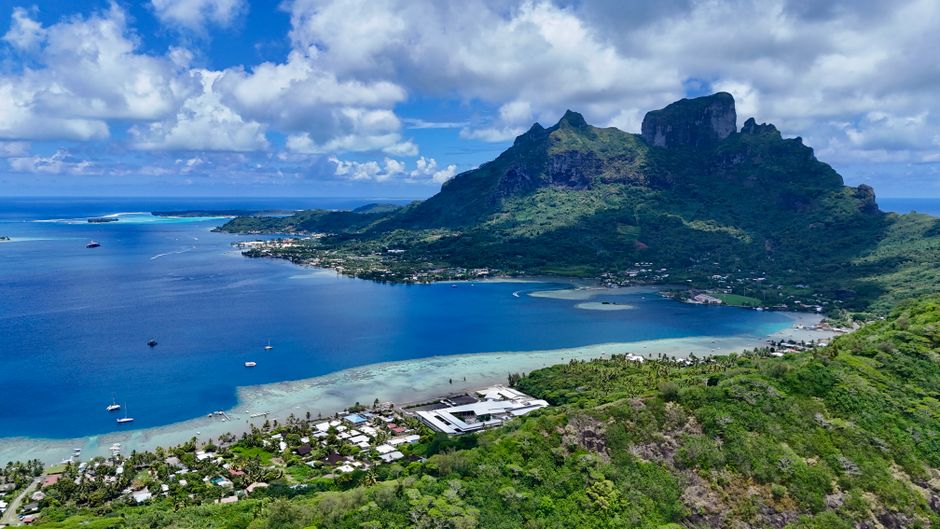
Photo by François Balédent on Pexels
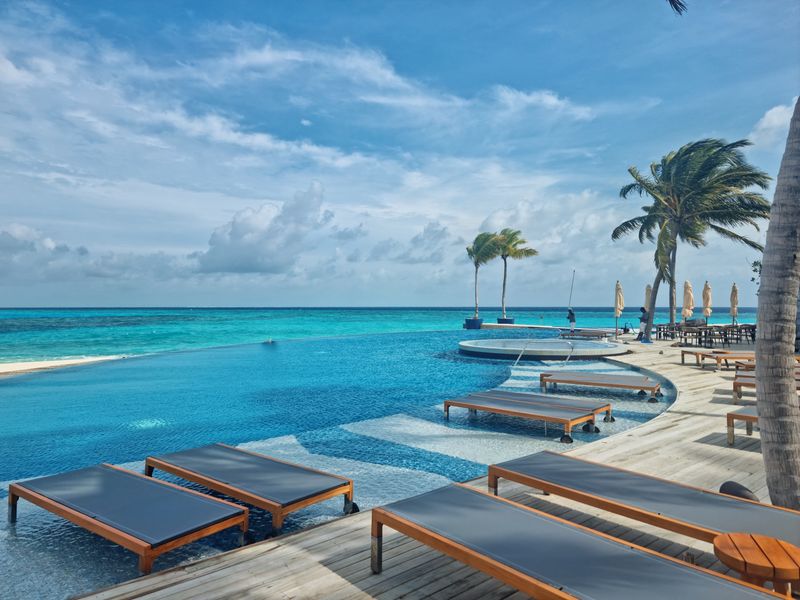
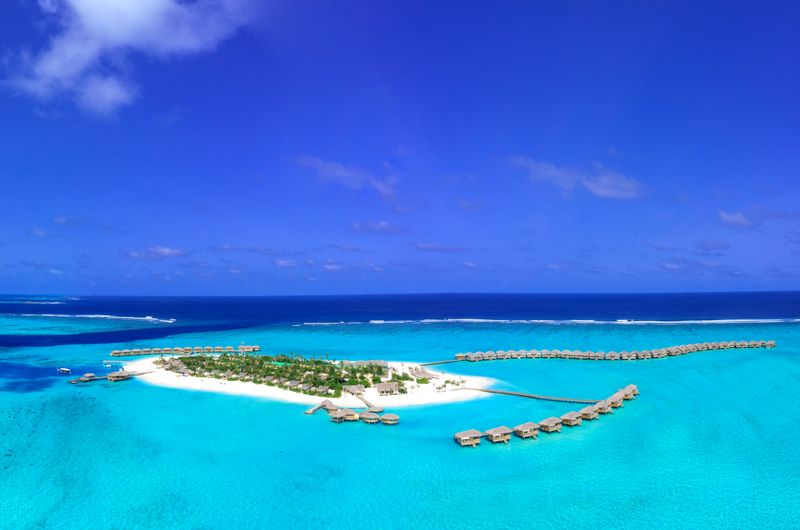
The Maldives, conversely, is entirely flat. It is a nation of 26 atolls comprising over a thousand coral islands, none of which rise more than a few feet above sea level. The beauty here is horizontal. It is about the infinite expanse of the Indian Ocean, the blinding white of the sandbars, and the shifting gradients of blue. There is no mountain to anchor your view. Instead, you get an uninterrupted horizon, which creates a profound sense of isolation and vastness.
If you want dramatic, cinematic landscapes, Bora Bora wins. If you want the feeling of being on a tiny, pristine speck of sand lost in an endless ocean, the Maldives delivers.
The Transit Reality: Flights and Logistics
Your starting point should heavily influence your decision. The romance of an overwater villa fades quickly if you spend three days getting there and arrive entirely depleted.
For travelers based in North America, particularly the West Coast, Bora Bora is significantly easier. You fly into Papeete, Tahiti (PPT)—an eight-hour flight from Los Angeles or San Francisco. From there, it is a 45-minute domestic hop on Air Tahiti to the Bora Bora airport, followed by a boat transfer to your resort. You can leave California in the morning and be having dinner on your deck that evening.
For Europeans, the Maldives is the logical choice. Direct flights from London, Paris, or Frankfurt to Malé (MLE) take roughly 10 to 11 hours. From Malé, you take either a speedboat or a seaplane to your resort. The seaplane transfers are an experience in themselves, offering incredible aerial views of the atolls, though they only operate during daylight hours, which can necessitate an overnight stay in Malé if your international flight arrives late.
Traveling from the US to the Maldives, or from Europe to Bora Bora, requires a serious commitment to transit. We are talking 24 to 30 hours of travel time, multiple layovers, and significant jet lag. Unless you have a specific, burning desire for one over the other, I always advise taking the path of least resistance.
The Resort Experience and Vibe
The structure of the hospitality industry differs greatly between the two. In the Maldives, the model is "one island, one resort." When you book a property like Soneva Fushi or Cheval Blanc Randheli, you are confined to that specific island for the duration of your stay. The resorts are entirely self-contained ecosystems. This fosters an intense level of privacy and exclusivity. You will not see anyone who is not a guest or a staff member. The service is often hyper-personalized, with dedicated butlers (often called "barefoot guardians" or similar titles) managing your schedule.
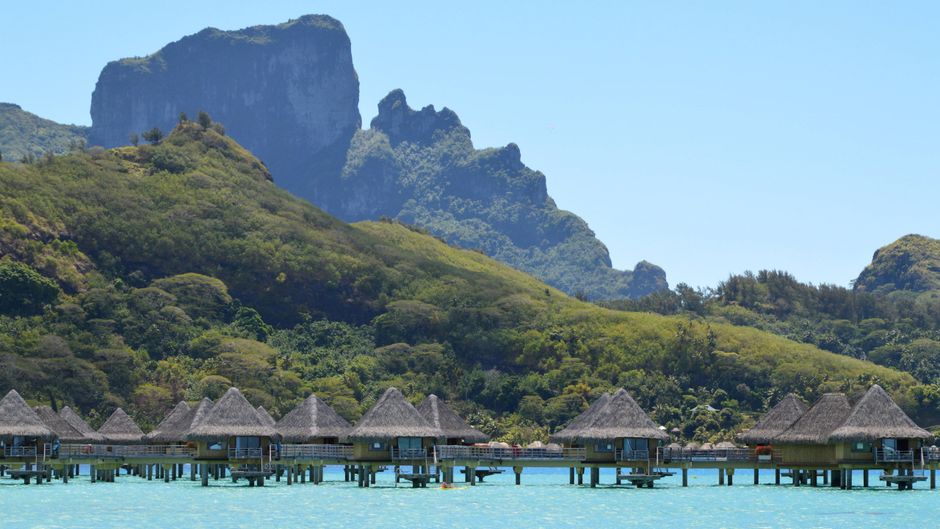
Photo by SlimMars 13 on Pexels
Bora Bora operates differently. While the luxury resorts are on private motus, they all share the same central lagoon. You will see boats ferrying guests between properties, jet skis zipping past, and locals going about their business. Furthermore, you can easily take a boat shuttle to the main island of Bora Bora to eat at a local restaurant, visit a pearl shop, or hike.
This means Bora Bora feels more like a real place with a local culture you can interact with, whereas the Maldives feels like a highly curated, private bubble. If you get restless easily and want the option to leave your hotel for dinner, Bora Bora is preferable. If you want total seclusion and have no desire to see anything beyond your resort's pristine borders, the Maldives is superior.
Food and Dining
Dining on remote islands is inherently challenging. Almost everything must be imported, which drives up costs and limits freshness.
In French Polynesia, the culinary influence is distinctly French, blended with local Polynesian ingredients. You will find excellent baguettes, imported French cheeses, and exceptional local seafood, particularly tuna, often served raw as poisson cru with coconut milk and lime. The food is generally very good, but the variety within a single resort can be somewhat limited after a week.
The Maldives, due to its proximity to India, Sri Lanka, and the Middle East, offers a more diverse flavor profile. The top resorts here have invested heavily in their culinary programs, often featuring multiple restaurants on a single tiny island, ranging from Japanese teppanyaki to elaborate Middle Eastern mezze and complex Maldivian curries. The sheer variety and quality of food at the highest-end Maldivian resorts slightly edge out Bora Bora, though you pay a premium for it.
Activities: Snorkeling, Diving, and Island-Hopping
When people ask bora bora vs maldives which is better, they are often thinking about what happens under the water.
The Maldives is one of the premier diving and snorkeling destinations on earth. The crucial advantage here is the "house reef." At many Maldivian resorts, you can step off the deck of your overwater villa, swim a few meters, and find yourself on a thriving coral reef teeming with turtles, reef sharks, and thousands of fish. The marine life is immediately accessible.
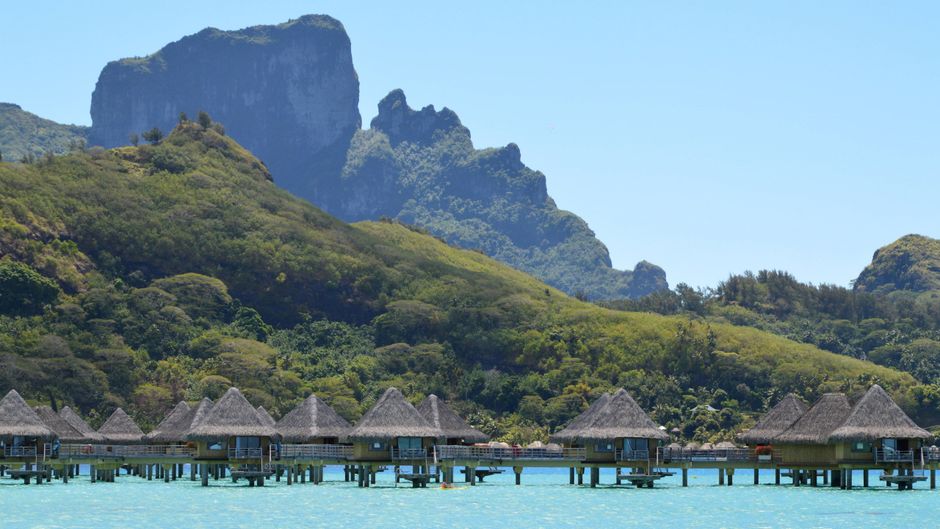
Photo by SlimMars 13 on Pexels
Bora Bora's lagoon is stunningly beautiful—a bright, clear, swimming-pool blue—but the sandy bottom means there is very little coral directly under the overwater bungalows. To see significant marine life, you need to book a boat excursion to the coral gardens at the edge of the reef or outside the lagoon. The excursions are excellent—swimming with blacktip reef sharks and stingrays is a standard, thrilling activity—but it requires planning and a boat ride.
However, French Polynesia excels at island-hopping. It is very common to split a trip between Bora Bora and other islands like Moorea, Taha'a, or the rugged Marquesas. This allows for a varied itinerary combining different landscapes and cultures. In the Maldives, transferring between resorts requires returning to the central hub of Malé, making multi-resort itineraries expensive and time-consuming.
The Cost Comparison
Neither destination is cheap, but the pricing structures differ. Bora Bora has a high barrier to entry; even the older, less updated resorts command premium prices. The Maldives has a much wider spectrum. You can find relatively affordable guesthouses on local islands, mid-range all-inclusives, and ultra-luxury private islands that cost tens of thousands of dollars per night.
Here is a realistic look at what you can expect for a luxury overwater experience:
| Destination | Best For | Approximate Nightly Rate (Luxury Overwater) | Food & Beverage Costs |
|---|---|---|---|
| Bora Bora | Dramatic scenery, active travelers, US West Coast departures | $1,200 - $3,500+ | High (Expect $300+ per day, per person) |
| The Maldives | Total seclusion, house reef snorkeling, European departures | $1,000 - $5,000+ | Very High (Often requires half-board or all-inclusive packages) |
What I Would Skip
If you go to Bora Bora, skip the generic "shark and ray feeding" group tours packed with dozens of other tourists. Instead, hire a private boat for a half-day to explore the quieter corners of the lagoon on your own schedule.
If you go to the Maldives, I would skip the resorts that require a domestic flight plus a speedboat transfer after you arrive in Malé. After a long-haul international flight, adding another two legs of travel is exhausting. Stick to resorts accessible by a direct seaplane or a short speedboat ride from the international airport.
Practicalities: When to Go and How Long to Stay
For Bora Bora, the dry season runs from May to October. This is the best time for clear skies and lower humidity, though it is also peak season for pricing. Expect to stay at least five to seven nights to justify the travel time, ideally combining it with a few nights on another island like Moorea.
The Maldives has its dry season from November to April. This aligns perfectly with the Northern Hemisphere's winter, making it an ideal escape from the cold. A stay of seven to ten nights is standard. Because you are confined to one island, anything longer than ten days can induce a slight case of island fever, no matter how luxurious the surroundings.
The Verdict: Bora Bora vs Maldives Which is Better?
There is no universal winner; there is only the right choice for your specific circumstances.
I recommend Bora Bora if you are flying from the Americas, if you want the visual drama of mountains rising from the sea, and if you like the idea of leaving your resort to explore a local island or eat at a casual roadside roulotte. It is a place that feels rooted in a specific Polynesian culture.
I recommend the Maldives if you are flying from Europe or the Middle East, if your primary goal is absolute privacy and relaxation, and if you want world-class snorkeling directly off your private deck. It is the ultimate expression of the castaway fantasy, refined to the highest possible standard of luxury.
Look at your flight routing, decide whether you prefer a mountain view or an endless horizon, and book accordingly. Both will provide the overwater experience you are looking for, just in entirely different registers.
Questions we get asked
Before you book
- Is Bora Bora or the Maldives more expensive?
- Generally, Bora Bora has a higher baseline cost for food and activities, while the Maldives offers a wider range of price points, though top-tier Maldivian resorts can easily exceed French Polynesian prices.
- Which has better snorkeling, Bora Bora or the Maldives?
- The Maldives generally offers superior house reefs accessible directly from your villa, whereas Bora Bora's lagoon requires boat excursions for the best marine life encounters.
- Can you island-hop in the Maldives like you can in French Polynesia?
- Island-hopping is much easier in French Polynesia. In the Maldives, resorts occupy private islands, making transfers between them costly and logistically complex.
Some links in this guide are affiliate links. If you book through them we may earn a commission at no extra cost to you — it never changes what we recommend. Read our disclosure.