The Falklands, South Georgia and Antarctica are not a cruise itinerary. They are a 17-day journey into a world of penguins, ice, weather and silence—and the travel experience that stays with you longest.
There are holidays you remember because the hotel was beautiful. Then there are journeys that rearrange your sense of the planet.
The 17-day expedition from the Falkland Islands to South Georgia is the second kind.
It begins in Punta Arenas, at the southern edge of Chile, and leaves the ordinary map behind. Over the following days, you move through islands shaped by wind, ocean and ice. Rockhopper penguins climb beaches. Black-browed albatross circle above the ship. Elephant seals gather along the shore. South Georgia rises from the sea with mountains wrapped in snow, and one of the world’s great king penguin colonies turns the beach into a living horizon.
Then comes Antarctica.
Not the Antarctica of a screen saver. The Antarctica of Zodiac boats, cold air, changing weather, white silence and the real possibility that the day’s landing will change because the sea says no. That uncertainty is not a flaw in the journey. It is the point.
Why this is the travel of a lifetime
Antarctica has become more accessible, but it has not become ordinary. IAATO’s 2025–26 figures record 27,217 cruise-only visitors, 85,195 landed visits and 1,106 deep-field visitors. Those numbers are significant, yet they are tiny beside the scale of global tourism. You are not joining a conventional resort circuit. You are entering a place where access is conditional, wildlife sets the rhythm and the itinerary remains partly unwritten.
A current Antarctica21 sea voyage combining the Falkland Islands and South Georgia is listed at 17 days and 16 nights, starting and ending in Punta Arenas. The route includes the Falklands, South Georgia, Grytviken, Fortuna Bay, Gold Harbour, Drygalski Fjord, St Andrews Bay and Salisbury Plain, subject to weather, sea conditions and government approval.
The operator lists guided excursions, onboard lectures, meals and beverages, waterproof landing boots, a contingency plan and an IAATO passenger fee among the inclusions. Prices and ship categories vary; the published starting price at the time of research was $9,995 per person. This is precisely the kind of journey where the cheapest headline fare is not the whole decision.
The question is not only “Can I afford Antarctica?” It is “Can I give Antarctica enough time, attention and respect?”
The itinerary, in the order you will remember it
Punta Arenas: the threshold
Punta Arenas is more than a departure port. It is the place where the trip changes temperature and tempo. You meet the expedition team, check your equipment, listen to the first briefing and look south knowing that the next days will be governed by sea conditions rather than your phone calendar.
Arrive early if you can. A missed connection before an expedition is not a minor inconvenience. It can become a serious logistical problem when the ship is scheduled to leave. Add a buffer night, keep essential medication and documents in your cabin bag and treat the pre-departure hotel as part of the expedition rather than an airport stop.
The Falkland Islands: life at the edge
The Falklands/Malvinas introduce a human landscape before the journey becomes fully wild. Port Stanley offers a place to walk, learn and understand the islands through the people who live there. Other landings can bring you close to rockhopper and gentoo penguins, black-browed albatross and windswept beaches where the weather seems to have the final word.
The magic is in the contrast. You are not simply looking for the biggest animal or the most dramatic cliff. You are learning to notice how a settlement, a bird colony, a beach and a weather system coexist in a remote place.
Keep your expectations flexible. Expedition itineraries are plans, not guarantees. The captain and expedition team may change the landing for safety, conservation, wildlife or sea conditions. A changed landing is not a failed day; it may be the day you see something the brochure could not promise.
South Georgia: the wildlife becomes a landscape
South Georgia is where many travellers realise that “wildlife encounter” is too small a phrase. The island is famous for enormous king penguin colonies, elephant seals, albatross and a history tied to the golden age of Antarctic exploration.
Grytviken carries the human story. The former whaling station, museum and Ernest Shackleton’s grave offer a moment of historical weight. Nearby bays bring the scale of living South Georgia into focus: penguins arranged across the shore, seals occupying the beach and mountains rising behind them.
At St Andrews Bay and Salisbury Plain, the colony is not a performance for visitors. You are the temporary presence. The right response is quiet attention, careful distance and the understanding that the animals are not there for your photograph.
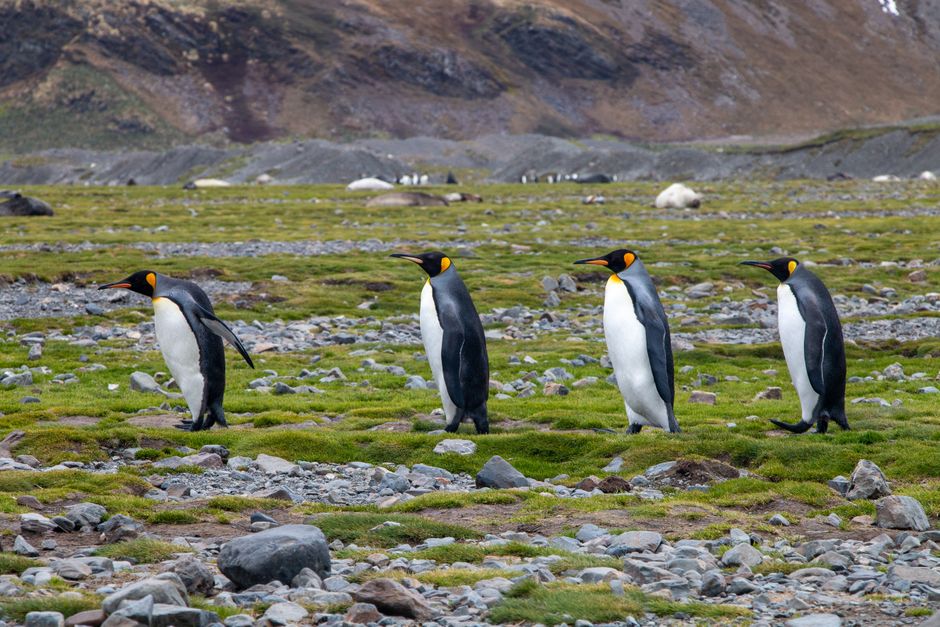
Photo by ArcticDesire.com Polarreisen on Pexels
Antarctica: the reason you came
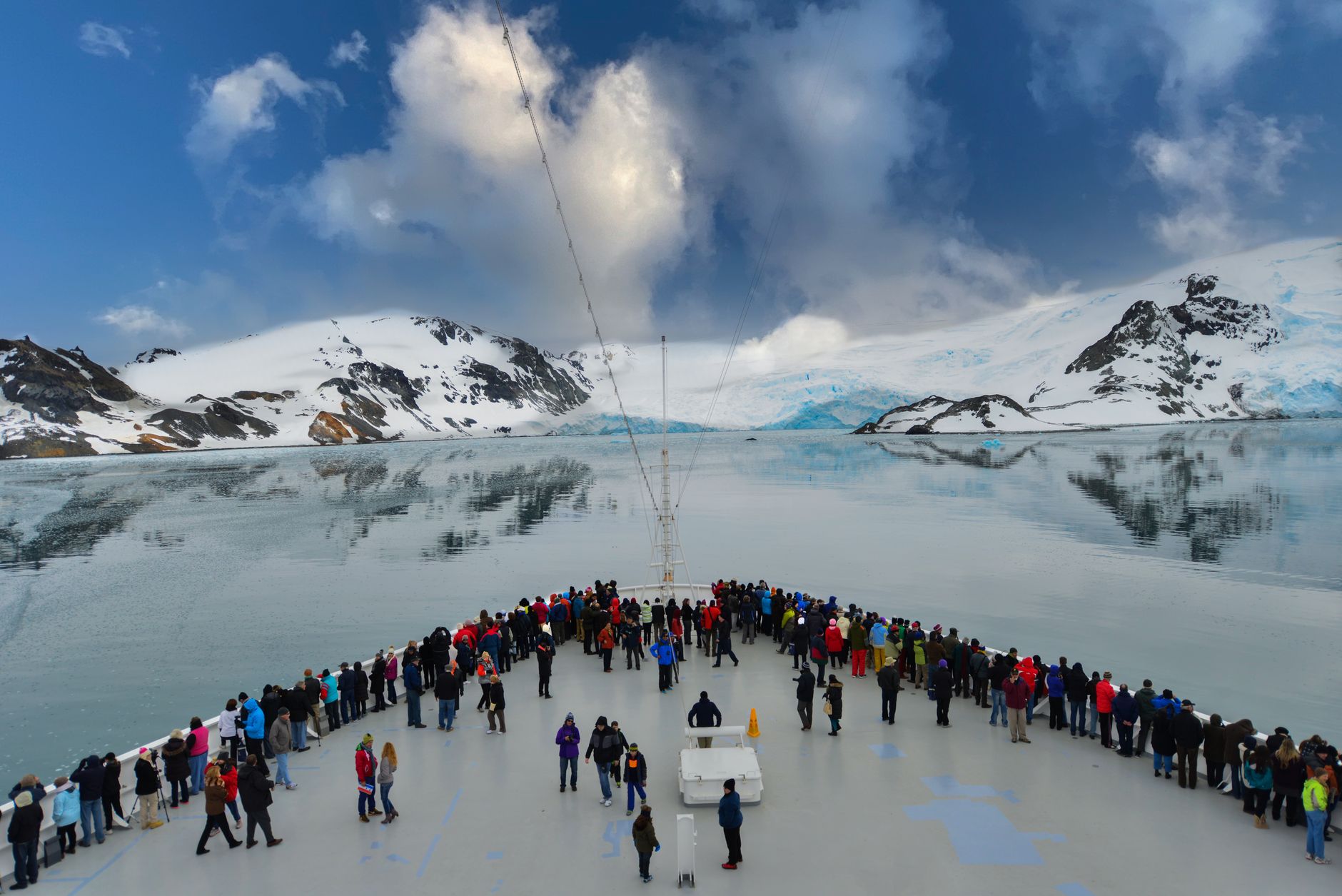
Eventually, the horizon changes. Ice appears. The sea becomes a field of blue and white. Mountains rise from the water with a geometry that makes familiar landscapes feel small.
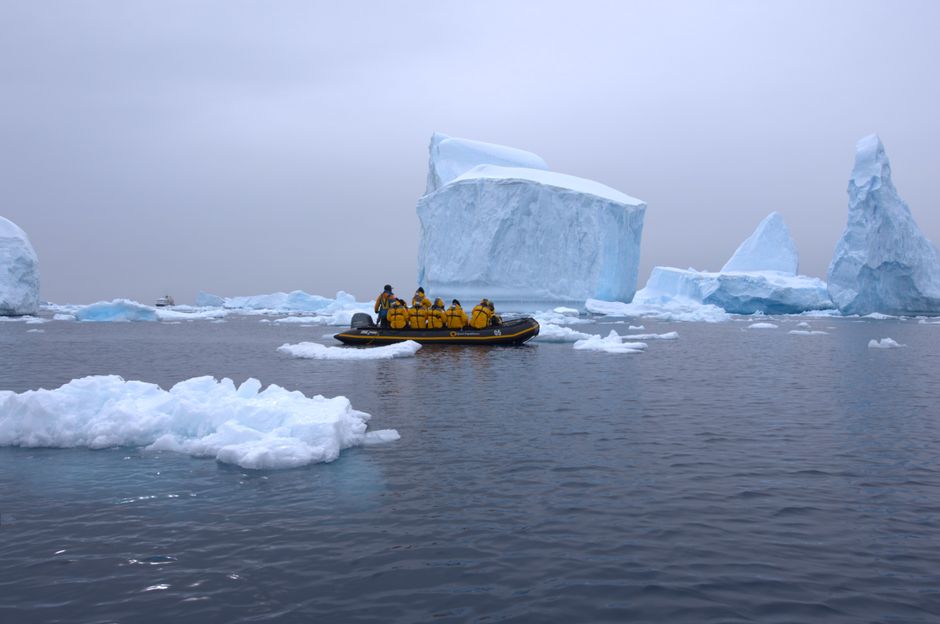
An Antarctic landing is not a checklist item. It may be a Zodiac ride through calm water, a walk on a snow-covered shore, a penguin colony watched from the correct distance or a ship cruise past a glacier because conditions do not allow a landing. You may see whales. You may see a seal resting on ice. You may see weather and very little else, which can be just as memorable.
The most important skill is being present without demanding a spectacle. Antarctica does not owe you the scene you imagined. It gives you something better when you let it remain itself.
What the expensive part is really buying
Luxury in Antarctica is not the size of the suite. It is competence, time and the ability to respond when the environment changes.
A strong expedition gives you experienced polar guides, a ship suited to the route, a serious safety culture, good lectures and enough observation space that you can keep watching when the weather shifts. It may include waterproof boots, but you still need the right layers, gloves, hat and waterproof outerwear.
Compare the expedition by what happens outside the cabin. Ask how many guides support the guests, how the operator handles missed landings, what medical facilities are available, what is included before and after the voyage, and whether the itinerary is designed around genuine shore time or mostly scenic cruising.
| Compare this | Why it matters | What to ask |
|---|---|---|
| Expedition team | Guides shape safety, landings and the quality of what you learn | How many polar guides support the group? |
| Ship and guest count | Smaller groups can make landings and wildlife viewing more considered | What is the maximum number of guests on shore? |
| Contingency plan | Weather can change the route without warning | What happens when a landing is cancelled? |
| Inclusions | Headline fares do not always include the same essentials | Are boots, transfers, meals and fees included? |
| Pre- and post-voyage support | A missed connection can threaten the whole expedition | What arrival buffer does the operator recommend? |
A private balcony is lovely. A thoughtful expedition team is essential.
How to choose your departure season
The Antarctic season generally runs through the Southern Hemisphere’s warmer months, but the character of the journey changes across the season.
Early-season departures can bring pristine snow and the anticipation of a landscape opening after winter. Mid-season journeys often offer long days and strong wildlife activity. Later departures can bring different light, changing ice and an atmosphere of the season moving towards its close.
There is no universally perfect month. Choose based on what you most want to see and how much flexibility you can tolerate. Ask the operator for the exact seasonal wildlife patterns, typical daylight and expected sea conditions for the itinerary you are considering.
If South Georgia is the emotional centre of the journey, check the planned dates carefully. If Antarctica itself is the priority, look at the landing programme, ship size and time allocated to the Peninsula rather than choosing by a single wildlife photograph.
The rules that make the journey possible
Antarctica rewards people who understand that access comes with obligations. Follow the operator’s instructions about distance from wildlife, clothing, cleaning footwear and carrying no food onto landings. Do not touch animals, block their routes or pursue the photograph that makes them change direction.
IAATO describes visiting Antarctica as a privilege and a responsibility, with separate preparation and during-visit guidance. Read it before you travel, not while you are standing in a queue for the Zodiac.
A responsible expedition also means accepting limits. You may not be able to land every day. You may not be allowed to walk where you expected. You may have to remain on the ship because the weather has changed. Those constraints protect the place that made the journey worth taking.
How to photograph a place that does not need your proof
Antarctica is built for dramatic photographs, but the most meaningful images often include scale. A small Zodiac against a glacier. A single person standing far from a penguin colony. A ship passing through blue ice. Breath visible in the air. A quiet deck after everyone has gone inside.
Use a long lens for wildlife and keep the required distance. Protect batteries from the cold. Carry fewer lenses than your excitement suggests. Learn the camera before the trip because the best encounters will not wait for a menu to load.
Put the camera down regularly. The first time a whale surfaces beside the ship, the first view of South Georgia or the moment an Antarctic mountain appears through mist should belong to your memory before it belongs to your archive.
The image that travels furthest may not be the most technically perfect. It may be a frame that shows how small we are in the landscape.
The packing list that earns its place
Start with layers. A moisture-wicking base layer, an insulating middle layer, a waterproof outer layer, warm socks, gloves and a hat will matter more than formal clothing. Bring sunglasses, sunscreen, lip protection, a dry bag, spare batteries, medication and shoes for time on the ship.
Ask the operator what is supplied. Some voyages include waterproof landing boots and loan equipment; others have different arrangements. Keep your passport, insurance documents, medication and camera batteries in your hand luggage. Pack for missed connections and a wet Zodiac ride, not for an imagined luxury brochure.
The best luggage is compact, durable and easy to move. You will be crossing gangways, stepping into boats and adapting to changing instructions. Antarctica is not the place for a suitcase that requires a personal assistant.
The day you will remember most
It may not be the day with the biggest penguin colony. It may be the day the ship stops in a quiet bay and everyone comes outside because the light has changed. It may be the moment an albatross holds its wings against the wind. It may be a landing that lasts only twenty minutes before the weather turns.
The journey of a lifetime is rarely one perfect scene. It is a series of moments that could not have happened in the same way anywhere else.
That is why a longer itinerary matters. Seventeen days gives the expedition time to become a rhythm: wake, brief, land, watch, return, learn, eat, look again. The trip stops being a collection of extraordinary images and becomes a temporary way of life.
The fine address
Go to Antarctica if you want to be entertained, and it will probably disappoint you. Go because you want to be changed by scale, weather, wildlife and the feeling of standing somewhere that refuses to become ordinary.
The Falklands give you the human edge of the journey. South Georgia gives you wildlife on a scale that feels almost impossible. Antarctica gives you ice, silence and the humility of a landscape that does not need your approval.
Book the best expedition team you can find. Leave time around the departure. Travel with the right layers, the right expectations and the willingness to let the weather rewrite the day.
At the end of the world, luxury is not control.
It is being there when the world is larger than your plans.
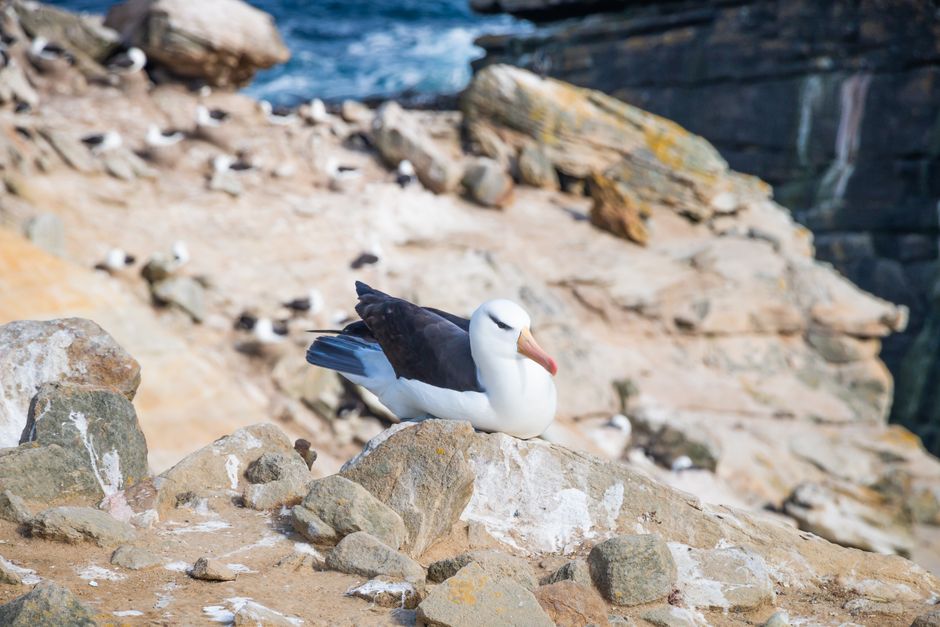
Photo by ArcticDesire.com Polarreisen on Pexels
Questions we get asked
Before you book
- How long does a Falklands, South Georgia and Antarctica expedition take?
- Current expedition programmes vary, but one published sea-voyage itinerary combining the Falklands and South Georgia is 17 days and 16 nights, starting and ending in Punta Arenas. Routes and landing plans are subject to conditions and approvals.
- What wildlife might I see?
- Depending on the route and conditions, travellers may encounter king, gentoo and rockhopper penguins, albatross, elephant seals, fur seals, whales and seabirds. Wildlife sightings cannot be guaranteed and should always be observed from the required distance.
- Is Antarctica travel responsible?
- It can be, when visitors follow IAATO guidance, use an experienced operator, respect wildlife and accept that landings and routes may change to protect people and the environment. Read the operator’s rules before booking.
A considered conversation
Comments
Some links in this guide are affiliate links. If you book through them we may earn a commission at no extra cost to you — it never changes what we recommend. Read our disclosure.