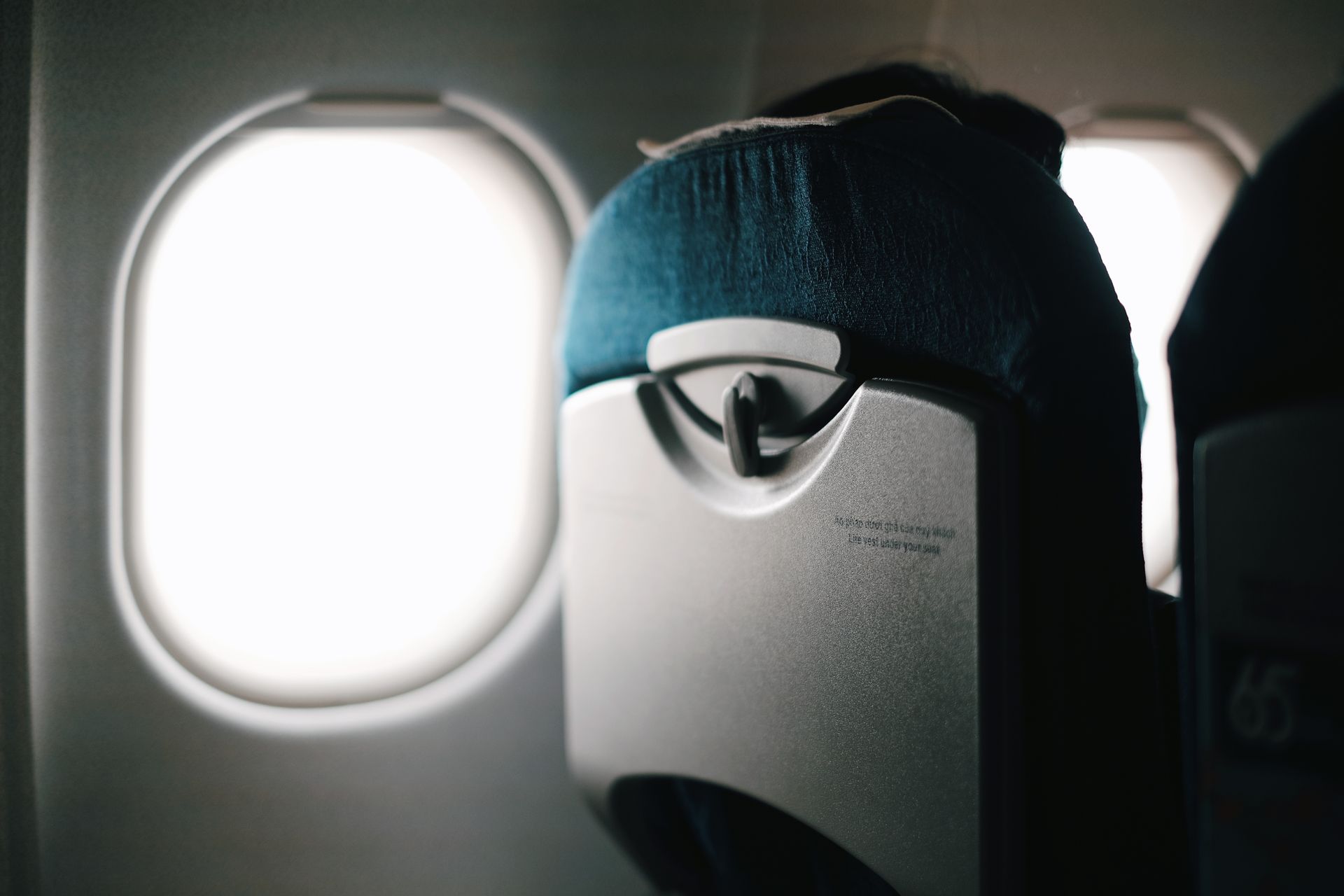
The internet is full of myths about scoring premium cabin seats. Here is the unvarnished truth about how I consistently fly business class without paying the retail premium.
I am sitting in seat 2A on a Boeing 777, a glass of reasonably cold Laurent-Perrier in hand, watching the rain streak across the window at Heathrow. The man across the aisle is wearing a suit that costs more than my car, and I know for a fact he paid roughly six thousand dollars for his ticket to Tokyo. I paid just under eighteen hundred. The difference between us is not status, nor is it a corporate travel budget. It is simply a matter of mechanics.
The internet is saturated with terrible advice about flying front of plane. You have likely seen the videos promising that dressing nicely or bringing chocolates for the cabin crew will secure you a flat bed. This is nonsense. If you are looking for cheap business class flight deals, you need to abandon the idea of magic tricks and start treating airline pricing like the volatile, algorithmic commodity market it actually is.
Finding premium cabin seats at a discount requires patience, a willingness to embrace mild inconvenience, and an understanding of how airlines route their aircraft. It is not about luck; it is about leverage. Over the past decade, I have refined a set of practical tactics that consistently yield excellent value. Here is exactly how I approach the process, stripping away the noise to focus on what actually works.
The Myth of the Gate Upgrade
Let us start with what I would skip entirely: the persistent myth of the free gate upgrade. There was a time, perhaps in the late nineties, when a polite request and a sharp blazer might move you from economy to business class if the back of the plane was oversold. Those days are dead.
Today, airline revenue management systems are ruthlessly efficient. If a flight is oversold in economy, the operational upgrades go strictly by the computer's hierarchy: top-tier elite frequent flyers first, followed by mid-tier, followed by those who paid the highest full-fare economy tickets. The gate agent has almost zero discretionary power to bump a random passenger into a premium cabin simply because they smiled.
Similarly, I would skip the cottage industry of "hidden city" ticketing for business class. While skipping the final leg of a journey can sometimes save money in economy, doing it in premium cabins is a fast track to having your frequent flyer account frozen and your accrued miles confiscated. Airlines are aggressively auditing these practices, and the risk heavily outweighs the reward. Instead of trying to trick the system, you are far better off learning how to navigate its legitimate inefficiencies.
Flexibility: The Only Real Currency
If you want to fly comfortably without paying retail, flexibility is your primary currency. Airlines price their premium cabins based on corporate demand. Business travellers fly on Mondays and return on Thursdays or Fridays. They need specific flights at specific times, and their companies will pay whatever the algorithm demands.
To find cheap business class flight deals, you must do the exact opposite. You fly on Tuesdays, Wednesdays, and Saturdays. You fly on major holidays when corporate travel is dead. You search for fares not by a specific date, but by a calendar month.
When I am planning a long-haul trip, I start with a broad search tool, leaving the destination open to an entire region and the dates flexible across a four-week window. I am looking for anomalies—routes where an airline has added capacity but demand has not yet caught up, or where a new carrier is trying to aggressively capture market share. It is a process of elimination, filtering out the noise until a genuinely excellent fare reveals itself.
The Positioning Flight Strategy
This brings us to the single most effective tactic for securing premium seats at a discount: the positioning flight.
Airline pricing is not based on distance; it is based on market competition and local purchasing power. A direct business class flight from London to Johannesburg on British Airways might cost five thousand dollars. But if you start that exact same journey in Cairo, flying EgyptAir to London and then connecting onto that identical British Airways flight to Johannesburg, the total price might drop to two thousand dollars.
You simply buy a cheap economy ticket—the positioning flight—to get yourself to the cheaper starting point. I frequently position to cities like Oslo, Dublin, or Budapest before flying long-haul to Asia or the Americas. The Scandinavian markets, in particular, often have highly competitive premium fares because of the intense competition between European and Middle Eastern carriers.
There is a catch, of course. You are building your own connection on separate tickets. If your positioning flight is delayed and you miss your long-haul departure, the airline operating the long-haul flight has no obligation to rebook you. You are simply a no-show. To mitigate this, I always leave at least six hours between flights, or better yet, I fly in the night before, book a comfortable airport hotel, and treat the layover as a miniature city break.
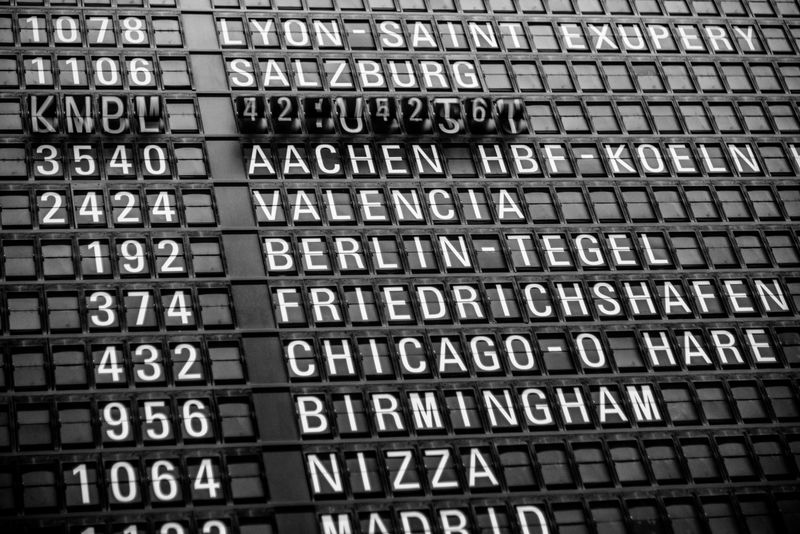
Photo by wal_ 172619 on Pexels
Points Transfer Sweet Spots
While cash sales are excellent, the most reliable method for flying at the front of the plane is leveraging transferable credit card points. I do not mean earning miles by flying—that is a fool's errand for leisure travellers, as the earning rates have been decimated over the last decade. I mean earning points through everyday spending, category multipliers, and substantial sign-up bonuses, then transferring them to the right frequent flyer programs.
The secret here is not to use the travel portal provided by your bank, which usually ties the point value directly to the cash price of the ticket, yielding a mediocre return. Instead, you transfer the points to an airline partner to book a dedicated award seat.
For example, booking a business class suite on ANA from North America to Tokyo might cost ten thousand dollars in cash. If you transfer points to Virgin Atlantic's Flying Club—a partner of ANA—you can often book that exact same seat for roughly ninety thousand points and a few hundred dollars in taxes. Similarly, transferring points to Air France-KLM's Flying Blue program can yield transatlantic business class seats for as little as fifty thousand points each way during their monthly promotional periods.
Finding these sweet spots requires learning the alliance networks. You use British Airways Avios to fly Qatar Airways Qsuites. You use Air Canada Aeroplan to fly Lufthansa or Swiss without paying exorbitant fuel surcharges. The inventory is limited, and airlines typically release award seats either 355 days in advance or at the very last minute, roughly fourteen days before departure. You must be ready to book the moment you see the availability.

Photo by Connor Danylenko on Pexels
When Premium Economy is the Smarter Buy
I will be entirely honest: there are times when business class is simply not worth the premium, no matter how good the deal is.
If I am flying from New York to London on a daytime flight, I will almost always book premium economy. The flight is barely six hours in the air. You do not need a flat bed to read a book and eat a mediocre chicken dish. Premium economy offers a wider seat, a dedicated armrest, and enough recline to be comfortable, usually for a third of the price of business class.
Conversely, on a fourteen-hour overnight flight from Frankfurt to Singapore, the flat bed is the difference between arriving ready to work and arriving in a state of mild delirium. You are paying for horizontal sleep, not for the champagne. It is crucial to evaluate the route, the aircraft type, and your own physical needs before committing to a premium fare.
| Cabin Class | Approximate Price Band (Long Haul) | Seat Type | Best For |
|---|---|---|---|
| Economy | $500 - $1,200 | Standard upright, 31-inch pitch | Daytime flights under 6 hours, strict budgets |
| Premium Economy | $1,100 - $2,500 | Recliner, 38-inch pitch | Daytime transatlantic, tall travellers needing legroom |
| Business Class | $2,000 - $6,000+ | Lie-flat bed, direct aisle access | Overnight flights over 8 hours, arriving rested |
| First Class | $8,000 - $15,000+ | Enclosed suite, premium dining | Once-in-a-lifetime splurges using points |
Practicalities: When to Book, How Long to Search, How to Route
The mechanics of booking require discipline. I treat flight searching as a weekly habit rather than a frantic scramble the month before a trip. You need to understand the baseline prices for your desired routes so that when a genuine sale appears, you recognize it immediately.
When to go: The cheapest premium fares are found during shoulder seasons—November, February, and early March for Europe; late summer for the Caribbean; and the monsoon transition months for Southeast Asia. If you insist on flying to Rome in July or New York in December, you will pay the maximum possible price, regardless of your tactics. Airlines know when you want to travel, and they price accordingly.
How long to stay: Many of the best discounted business class fares require a Saturday night stay. This is a legacy rule designed to prevent corporate travellers (who want to be home for the weekend) from buying cheap leisure fares. If you are planning a trip, ensure your dates span a weekend. Furthermore, extending your trip to ten or fourteen days can sometimes open up cheaper fare buckets that are restricted on shorter itineraries.
How to get there: Use tools like Google Flights and ITA Matrix. Set up price alerts for your ideal routes, but also set alerts for alternative airports. If you want to go to Tokyo, track flights to Osaka and Seoul as well. A cheap business class flight to Seoul followed by a two-hour low-cost hop to Tokyo is often vastly cheaper than flying direct. The same applies to Europe: flying into Brussels or Amsterdam and taking a fast train to Paris is frequently more economical than flying directly into Charles de Gaulle.
Photo by Athish sasidharan on Pexels
The Final Verdict
Finding cheap business class flight deals is ultimately an exercise in compromise. You are trading your time, your flexibility, and occasionally your direct routing in exchange for a flat bed and a decent glass of wine.
If you are planning a major long-haul trip this year, my recommendation is to ignore the cash prices entirely and focus on the points transfer sweet spots. Secure a sign-up bonus on a premium travel credit card, wait for a transfer bonus to an airline partner (banks frequently offer 20% to 30% bonuses when moving points to programs like Flying Blue or Avios), and book an award seat 355 days in advance.
It requires foresight, and it requires logging onto an airline website at midnight to grab the seats the moment they are released. But when you are settling into your suite, watching the rain streak across the window while the rest of the plane files past, you will know the effort was entirely justified.
Questions we get asked
Before you book
- Do last minute business class upgrades work?
- Rarely. Airlines prefer to fly seats empty or upgrade their top-tier elite members rather than sell cheap upgrades at the gate.
- What is a positioning flight?
- A short, cheap flight you take to start your main long-haul journey from a different city where premium fares are significantly lower.
- Are error fares still a thing?
- Yes, but they are increasingly rare and airlines often cancel them. Never book non-refundable hotels until the ticket is fully ticketed and confirmed.
Some links in this guide are affiliate links. If you book through them we may earn a commission at no extra cost to you — it never changes what we recommend. Read our disclosure.