The coastal road is a parking lot by June. If you want to experience the Amalfi Coast properly, you have to do it from the water. Here is the exact itinerary I use.
The first time you see the Amalfi Coast from the window of a car, you are likely stationary. The SS163, the single ribbon of asphalt that connects these vertical villages, is a marvel of 19th-century engineering that has entirely failed to cope with 21st-century tourism. By mid-June, it is less a road and more a linear parking lot of idling buses, stressed drivers, and Vespa riders weaving dangerously close to the cliff edge.
If you want to experience this stretch of Campania properly, you have to change your perspective. You have to get off the road and onto the water. When friends ask me for an amalfi coast luxury itinerary positano is almost always the base I recommend, but with a strict caveat: you sleep in Positano, but you spend your days on a boat.
This is the exact itinerary I send to people who want the glamour of the coast without the gridlock. It requires a healthy budget, a willingness to climb stairs, and the foresight to book your boats months in advance.
The Reality of the Coastal Road
Let us address the traffic problem immediately. The Amalfi Coast is geographically constrained. There is no bypass, no alternative route, and no way to widen the existing road without blasting away the very cliffs people come to see. In July and August, a drive from Positano to Amalfi town—a distance of roughly 16 kilometres—can easily take two hours.
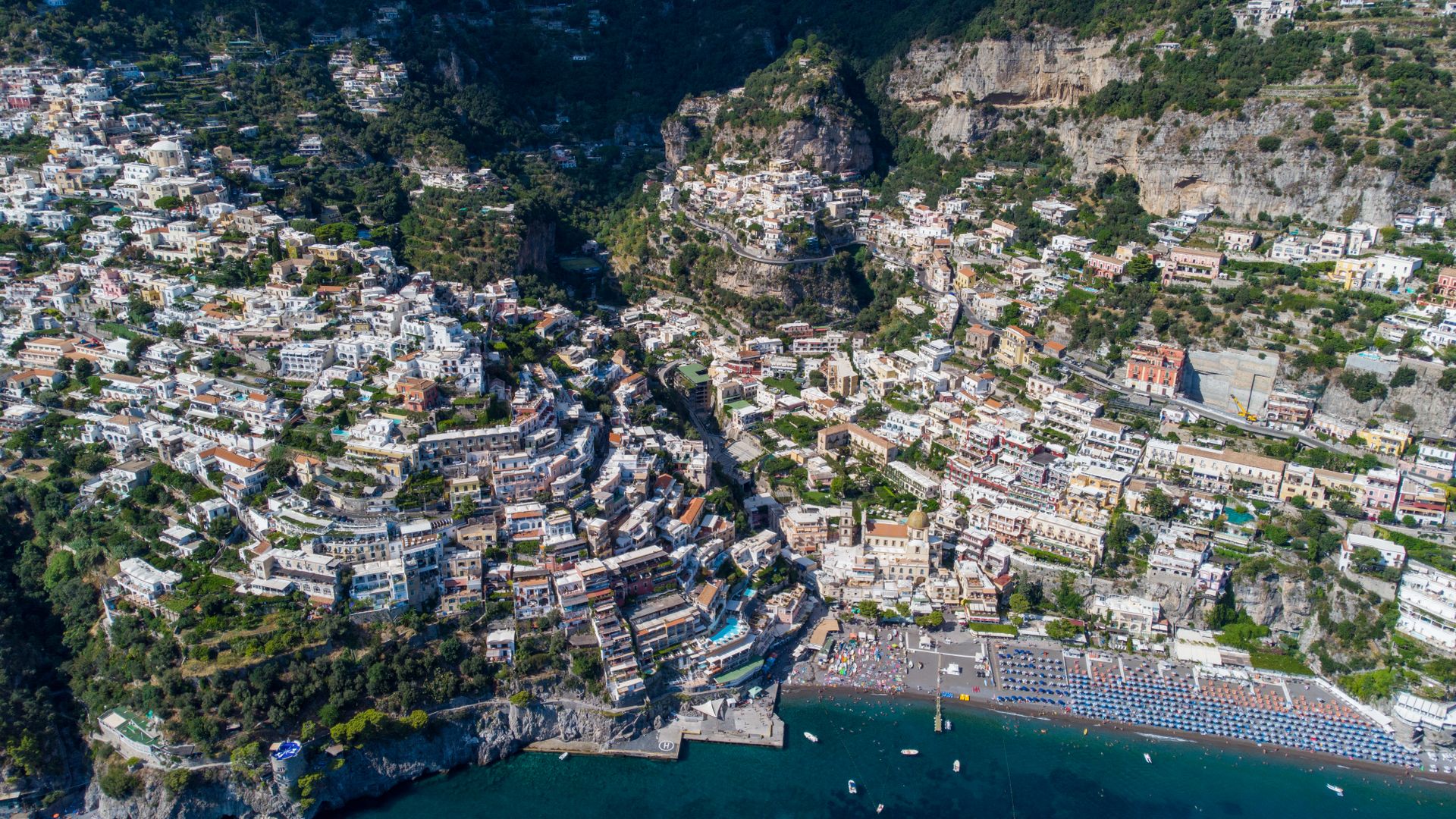
This is why a land-based itinerary here is an exercise in frustration. If you plan to drive or take taxis between towns every day, you will spend a significant portion of your holiday staring at the back of a SITA bus. The solution is simple: use the sea as your highway. A private boat not only bypasses the traffic entirely, but it also offers the only vantage point from which these towns truly make sense. They were built to be approached from the water, their pastel houses tumbling down the ravines like spilled sugar almonds.
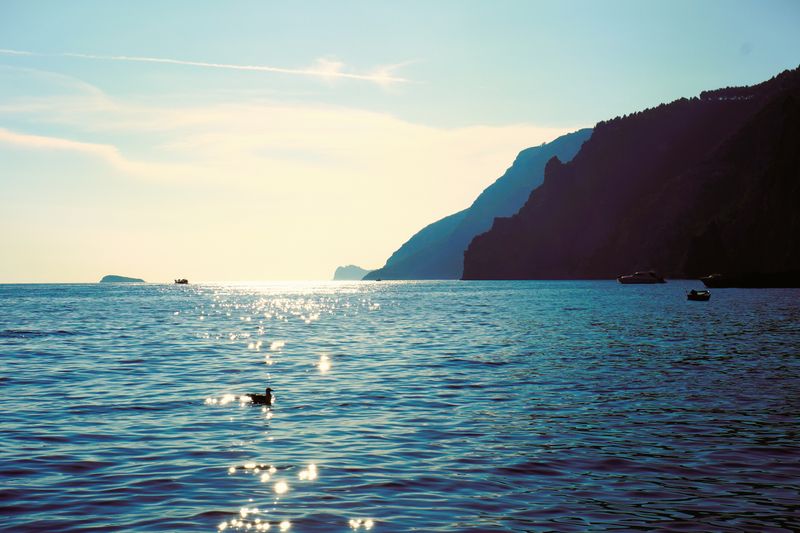
Photo by Budget Bizar on Pexels
Where to Base: Positano vs Ravello vs Praiano
Choosing your base dictates the rhythm of your entire trip. While there are dozens of coves and villages, the decision usually comes down to three distinct options. I am honest with people: Amalfi town itself is the weakest base. It is flat, which makes it crowded with day-trippers, and it lacks the elevated elegance of its neighbours.
Here is how the main contenders compare.
| Base | The Vibe | Best For | Approximate Nightly Rate (Summer) |
|---|---|---|---|
| Positano | High glamour, steep climbs, excellent logistics | First-timers, dining out, boat access | €800 - €3,500+ |
| Ravello | Quiet, aristocratic, elevated (no beach) | Honeymooners, classical music, views | €600 - €2,500+ |
| Praiano | Slower pace, better sunsets, fewer crowds | Couples, longer stays, avoiding the rush | €400 - €1,500+ |
I almost always recommend Positano for a first trip, despite the crowds. It has the best port logistics for daily boat charters, the highest concentration of excellent restaurants, and a verticality that forces you to earn your pasta. Yes, the stairs are a reality. You will climb hundreds of them a day. If mobility is an issue, Positano is not for you. But if you can handle the ascent, the reward is a terrace view that remains unmatched anywhere in the Mediterranean.
The Amalfi Coast Luxury Itinerary Positano Base
This is a six-day, seven-night framework. It assumes you arrive on a Saturday and leave the following Saturday, though it works for any days of the week. The pacing is deliberate: active days on the water followed by slow evenings on land.
Day 1: Arrival and the Stair Reality
Your first day is about settling in and accepting the geography. Arrive in the afternoon, check into your hotel, and immediately change your shoes. Positano is no place for heels. Spend the late afternoon walking the labyrinth of pedestrian paths. The main beach, Spiaggia Grande, will be chaotic; ignore it for now.
Instead, find a terrace for an aperitivo. Franco's Bar is the famous choice, but I prefer the quieter elegance of the Champagne Bar at Le Sirenuse, or simply the balcony of your own room. Dinner should be local and unfussy. You have just travelled; you do not need a tasting menu tonight.
Day 2: The Capri Crossing
Your first full day is your first boat day. Capri is not technically part of the Amalfi Coast, but it is the essential day trip. You want a traditional wooden gozzo or a sleek Itama speedboat. Leave Positano by 9:30 AM to beat the worst of the ferry traffic.
The crossing takes about 40 minutes. Skip the Blue Grotto—it is a tourist trap that involves waiting an hour in the sun to spend three minutes in a dark cave. Instead, have your skipper take you around the Faraglioni rocks, swim in the Green Grotto, and drop anchor near the Punta Carena lighthouse.
For lunch, have the boat drop you at Il Riccio or La Fontelina. Both require reservations made months in advance. La Fontelina is iconic, with its blue-and-white striped umbrellas, but the food at Il Riccio is marginally better. Return to Positano in the late afternoon, salt-baked and exhausted.
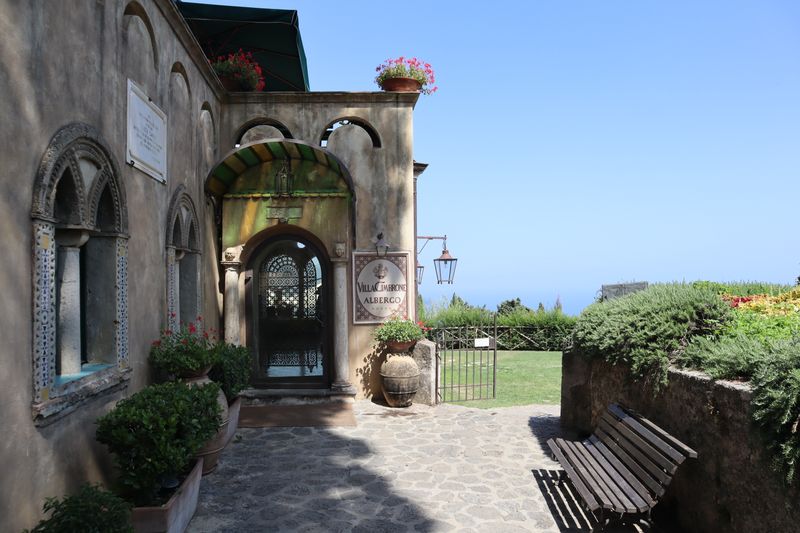
Photo by Mihaela Claudia Puscas on Pexels
Day 3: Beach Clubs and Nerano
Yesterday was about seeing and being seen; today is about eating. Nerano is a small fishing village at the tip of the Sorrentine peninsula, famous for one dish: spaghetti alla Nerano, a brilliant emulsion of fried zucchini, provolone del Monaco cheese, and basil.
Take a smaller boat today. Hug the coastline, stopping to swim in the deep, cool water near the Li Galli islands—a private archipelago once owned by Rudolf Nureyev. Arrive in Nerano around 1:30 PM. Lo Scoglio is the institution here. The dining room extends over the water on a wooden deck. Order the zucchini pasta, a whole baked pezzogna (local sea bream), and a bottle of crisp Fiano di Avellino.
After a long, lazy lunch, you will not want to do anything but sleep on the deck of your boat as it gently motors back to Positano.
Day 4: Up to Ravello
You cannot spend the entire week at sea level. Ravello sits 365 metres above the Tyrrhenian Sea, a quiet, aristocratic enclave of gardens and villas. Because it is not on the water, it feels entirely different from Positano—cooler, greener, and significantly more refined.
This is the one day you brave the road, but you do it smartly. Hire a driver to take you up in the morning before the traffic peaks. Visit Villa Cimbrone for the Terrace of Infinity, a balcony lined with marble busts that seems to float above the clouds. Then walk over to Villa Rufolo, whose gardens inspired Richard Wagner.
Have lunch in the piazza or at the Belmond Hotel Caruso, then have your driver take you back down in the mid-afternoon. The contrast between Ravello's serene gardens and Positano's vertical energy is striking.
Day 5: The Path of the Gods or Doing Nothing
By day five, you need a choice. If you are active, wake up at 6:30 AM and hike the Sentiero degli Dei (Path of the Gods). It is a spectacular, vertigo-inducing trail that runs high above the coast from Bomerano to Nocelle. It takes about three hours, and you must do it early before the heat sets in.
If the idea of a three-hour hike on holiday appalls you, do nothing. Book a sunbed at Arienzo Beach Club, accessible only by their private wooden shuttle boat from the Positano pier. It is less chaotic than Spiaggia Grande. Drink iced tea with peach, read a novel, and watch the yachts bob in the bay.
Day 6: The Final Sail
For your last full day, charter a boat one more time. This time, head east towards Amalfi and beyond. The coastline becomes wilder and more rugged past Amalfi town. See the Fjord of Furore, a dramatic gorge cut into the rock, and swim near the quiet village of Praiano.
Have your skipper book a table at a small, boat-access-only restaurant like Da Adolfo at Laurito beach (if you want rustic and lively) or Conca del Sogno (if you want polished and scene-y). Spend the afternoon soaking in the final views of the cliffs from the water, cementing the memory of the coast as it should be seen.
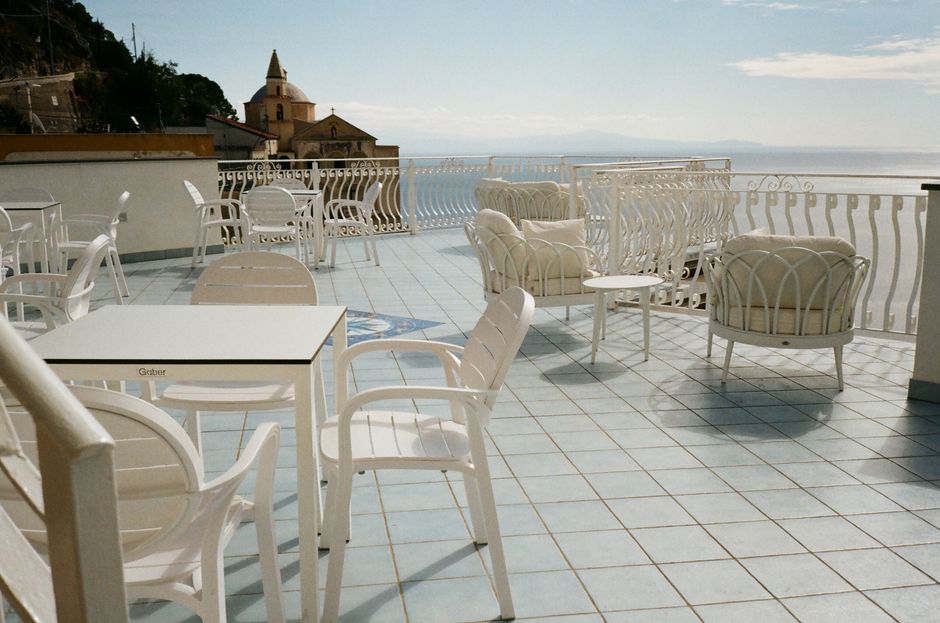
Photo by Kristina Snowasp on Pexels
Logistics: Transfers from Naples
Getting to Positano requires planning. You will likely fly into Naples Capodichino (NAP) or arrive at Napoli Centrale train station.
Do not attempt the public ferry with luggage. The ferry from Naples requires a taxi to the port, a bumpy ride, and then the grim reality of dragging your suitcases up the steep hills of Positano. Similarly, the Circumvesuviana train to Sorrento followed by a bus is a sweaty, miserable experience that will ruin your mood before you even arrive.
The only civilized way to arrive is by private car transfer. A driver will meet you at the arrivals hall, handle your bags, and navigate the SS163 with the calm competence of a local. The journey takes roughly 90 minutes, depending on traffic, and costs around €130 to €180. It is the best money you will spend on the entire trip.
What I Would Skip
I am often asked what to cut from an itinerary. First, skip Amalfi town as a base. It is historically significant, and the cathedral is beautiful, but the town itself is a bottleneck for bus tours and cruise ship passengers. Visit it for an hour if you must, but do not sleep there.
Second, skip the Blue Grotto on Capri. The wait-to-reward ratio is entirely skewed.
Finally, skip the idea of "winging it." The Amalfi Coast in summer is a machine that runs on reservations. If you want a sunbed at a good beach club, a table at a decent restaurant, or a boat on a Tuesday in July, you need to book it in March. Spontaneity here usually results in eating mediocre pizza on a crowded sidewalk.
The Final Word
The Amalfi Coast is demanding. It demands your money, your patience with its logistics, and your physical effort on its stairs. But when you are sitting on the back of a wooden boat, the late afternoon sun turning the cliffs of Positano a deep, bruised gold, with the taste of salt on your skin and a glass of cold Falanghina in your hand, you realize why people endure the crowds.
If I were booking this trip for myself tomorrow, I would secure a room at Le Sirenuse or Hotel Santa Caterina, book three days of private boat charters, and arrange a seamless transfer from Naples. I would pack light, bring comfortable shoes, and prepare to spend my days entirely on the water. That is the secret to the coast. Leave the roads to the tourists; take to the sea.
Questions we get asked
Before you book
- Is Positano too crowded in the summer?
- Yes, the main beach and lower streets are packed from June to September. The trick is to spend your days on the water or at private beach clubs, retreating to your hotel terrace in the late afternoon.
- How many days do you need on the Amalfi Coast?
- Five to seven days is ideal. Anything less feels rushed, especially given the travel time required to get there from major airports.
- Should I rent a car on the Amalfi Coast?
- Absolutely not. The SS163 is notoriously narrow, parking is nearly impossible, and traffic moves at a crawl. Rely on private drivers and boats.
Some links in this guide are affiliate links. If you book through them we may earn a commission at no extra cost to you — it never changes what we recommend. Read our disclosure.