The best luxury ski resorts in the Alps are not always the largest or flashiest. Use a smarter measure — lift capacity relative to beds and bottlenecks — to choose resorts where a premium ski week still feels effortless.
The booking decision is not “which resort is biggest?”
It is whether you want a week spent skiing, or a week spent joining the same queue at 10.15 every morning because you booked the most photogenic village in the most fashionable week.
For travellers searching for the best luxury ski resorts Alps experience, the usual filters — piste kilometres, hotel polish, altitude, Michelin-adjacent dining — are incomplete. The more revealing question is how much uphill capacity a resort has relative to the number of people sleeping there and arriving from nearby valleys. Resorts rarely publish that figure, and it would be imperfect even if they did: day visitors, school holidays, lift layout and wind closures all matter. But use it as a way of thinking and your shortlist changes quickly.
I call it the lift-capacity-per-bed test. You are looking for a compact or sensibly distributed hotel base, modern lifts that begin close to where guests stay, and enough terrain that skiers disperse after the first hour. You are avoiding grand domains whose famous choke points funnel everyone through one gondola, and villages that sell far more beds than the local lift network can gracefully absorb.
This is not a promise of empty pistes in Christmas week or during a February school holiday. Nothing in the Alps makes that promise honestly. It is a guide to resorts where the infrastructure, geography and accommodation pattern give a luxury ski week a fighting chance of feeling civilised.
Photo by Jean-Paul Wettstein on Pexels
How to use the test before you book
First, ignore the total piste figure for a moment. A 300km domain can ski smaller than a 100km one if its connections are awkward; a modest resort can feel generous when every hotel sits within minutes of several fast lifts.
Then inspect the piste map as if it were a transport plan. Are there two or three ways out of the village? Do the best intermediate runs return to separate bases? Is the headline circuit an optional day out, rather than the only way to find variety? Finally, ask the hotel one blunt question: which lift do guests use first, and how long is the walk in ski boots? “Near the slopes” is not an answer.
The four resorts below are not identical. Kühtai is the functional, high-altitude answer; Gurgl is the polished all-rounder; Lech and Zürs offer serious social and culinary capital at a cost; San Cassiano brings the Dolomites’ best lunch-led luxury, provided you ski its geography intelligently.
| Resort and best base | Why the queue equation works | The trade-off | Best timing |
|---|---|---|---|
| Gurgl, Austria — Obergurgl or Hochgurgl | Two linked sectors, several feeder lifts and enough altitude to keep the season dependable | The village life is quiet and the skiing is better for cruisers than mileage obsessives | Mid-January to early February; March is excellent in settled weather |
| Kühtai, Austria — slopeside village | A very compact hotel footprint, lift access from almost everywhere and unusually high stated uphill capacity for its size | Limited evening character and exposure in wind or flat light | January through early April, avoiding weekends if possible |
| Lech, Oberlech or Zürs, Austria | Strong local lift access and a wide Arlberg spread once you leave the core lifts behind | Expensive, and the long cross-domain mission towards St Anton can become a logistical project | January, or March outside peak school weeks |
| Alta Badia, Italy — San Cassiano | Several local lifts, gentle terrain that disperses skiers, and an outstanding on-mountain lunch culture | Sellaronda connections can be busy; lower slopes are less forgiving in warm spells | Late January to mid-March, starting early |
1. Gurgl, Austria: the sensible luxury choice
Gurgl — the joint identity of Obergurgl and Hochgurgl — is what I would book for a group containing strong intermediates, one cautious skier and people who care about a proper hotel more than a loud village. The ski area has 112km of pistes and 25 lifts, spread between two sectors rather than piled above one congested main street. Its skiing runs from 1,800m to 3,030m, which is meaningful when the lower Alps have a thin, nervous snow line. (gurgl.com)
The useful luxury is not marble for its own sake. It is leaving breakfast with boots on and choosing between more than one viable route uphill. Obergurgl has the more village-like feel and a straightforward rhythm of broad groomers. Hochgurgl feels more elevated and removed, a better fit if your ideal après-ski is a long sauna, a drink that is properly made and an early dinner.
Do not book Gurgl expecting dramatic nightlife or endless steep terrain. It is not trying to be St Anton, and that restraint is part of the appeal. Ski hard until lunch, take the long Wurmkogl-to-Pill descent — 8km and 1,260 vertical metres — then stop pretending that an extra hour of chopped-up pistes improves the day. (gurgl.com)
For American arrivals, the final approach deserves respect. The airport may be simple, but the last leg is still a mountain-valley transfer with bags, boots and potentially wintry roads. Arrange it door to door rather than turning the first afternoon into an exercise in connections.
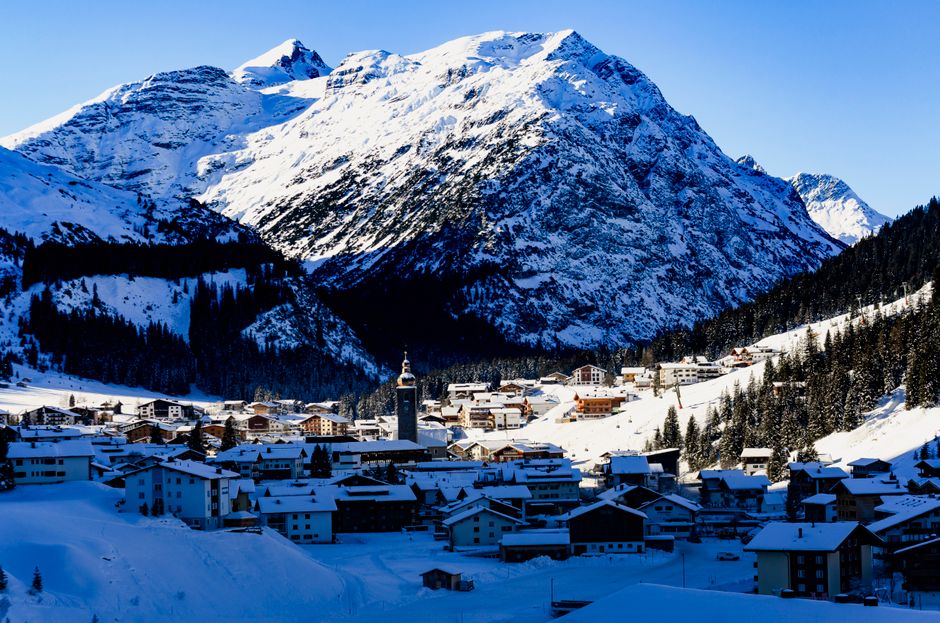
Photo by Harry Dona on Pexels
2. Kühtai, Austria: choose skiing over village theatre
Kühtai is the answer for travellers who find the phrase “low-key” overused but genuinely want it. At 2,020m, it starts above the altitude at which many better-known Alpine resorts finish. The resort’s own operator cites 19,451 people per hour of transport capacity, served by an eight-seat gondola, covered chairs, surface lifts and a compact village where hotels and pistes sit unusually close together. (kuehtai.info)
That number is not a universal queue guarantee. A capacity figure cannot tell you which lift becomes unpleasant in a storm, or how a Saturday arrival pattern changes the morning. But it does point to the central advantage: Kühtai was built for an easy ski day. You do not spend half the morning travelling to the mountain, then queueing to begin.
The terrain alone is enough for a long weekend and works neatly for a five-night trip, especially for intermediates who prefer repeatable, well-groomed descents to a daily conquest narrative. The local area is smaller than Gurgl, though the linked pass arrangement with Hochoetz offers a change of scene by ski bus. Regional information lists 90.8km across Kühtai–Hochoetz, while the immediate Kühtai village remains the more convenient base. (innsbruck.info)
Its drawback is obvious by the second evening: this is a hotel village, not a historic town. There are comfortable places to eat and drink, but not much reason to promenade in a different direction every night. I would take that bargain for a short, snow-focused luxury escape; I would not choose it for a couple wanting seven nights of galleries, shopping and restaurant hopping.
Innsbruck is roughly 45 minutes by car, making Kühtai unusually practical for somewhere so high. (press.austria.info) A private transfer is worth it here, particularly for a Friday evening arrival when you want to be in the spa, not negotiating the Sellrain valley with ski luggage.
3. Lech, Oberlech and Zürs: pay for position, not merely pedigree
Lech remains one of the Alps’ most convincing luxury ski addresses, but it is not a single product. Choose the base badly and you can still spend your week doing awkward morning logistics. Choose it well and the vast Ski Arlberg network feels expansive rather than exhausting.
My preference is simple. Book Oberlech if ski-in/ski-out still means something to you, Lech if you want the greatest choice of hotel bars and a village you can walk through in normal shoes, and Zürs if your priorities are snow, space and a deliberately quiet evening. Do not stay in Lech and assume a daily expedition to St Anton is the clever use of the domain. On a map it is continuous; in boots, in weather, with closing lifts to consider, it is a commitment. Ski the Lech–Zürs–Warth side properly first.
Arlberg is large enough that its overall figures — commonly described by the destination as Austria’s largest ski area — should not seduce you into believing every link is frictionless. (lechzuers.com) The luxury move is to use the scale selectively. Start early, take the local lifts before the ski schools fill the obvious corridors, and make one deliberate long-range day only when visibility is good. On a powder day, hire a qualified guide instead of following tracks beyond managed terrain; the headline off-piste is not a substitute for judgement.
Lech and Zürs win on the combination of well-run hotels, skiing that rewards competent intermediates and experts alike, and a resort culture that does not require a nightclub to prove it is having fun. They lose on cost and on the fact that peak dates are peak dates, whatever the room rate. If you are paying for a top hotel, move your week away from school holidays rather than accepting a crowded version of the experience.
4. San Cassiano, Alta Badia: the elegant answer, with one caveat
Alta Badia is often described through food, and correctly so, but that can obscure its practical skiing virtue. Its local network has 53 lifts serving 130km of pistes, including 74km of easy terrain and 47km of intermediate runs. (altabadia.org) It is a remarkably civilised place to ski if everyone in your party enjoys red and blue pistes, takes lunch seriously and does not define success by the number of black runs conquered before noon.
For the most composed stay, base yourselves in San Cassiano rather than automatically defaulting to busier Corvara. San Cassiano has direct access from Piz Sorega, a quieter village rhythm and straightforward routes into the larger circuit when you want them. Corvara is more central, and therefore more tempting to everyone else too.
The caveat is the Sellaronda. It is brilliant as a landscape tour, but treating it as your daily commute is a mistake. Start early, go in the direction with the better forecast, and do it once or twice. On the other days, linger around the local sectors, ski towards La Villa, or make the Great World War circuit only after checking the live lift and route status. Alta Badia’s official report provides real-time lift information, and this is one place where looking at it over breakfast genuinely changes the shape of the day. (altabadia.org)
The Dolomiti Superski pass opens a huge network — 12 ski areas, 450 lift facilities and 1,200km of connected pistes — but a bigger pass does not mean a better day. (altabadia.org) Stay local when the snow is soft, the light is flat, or lunch is calling. The views will not be diminished by skipping a circuit.
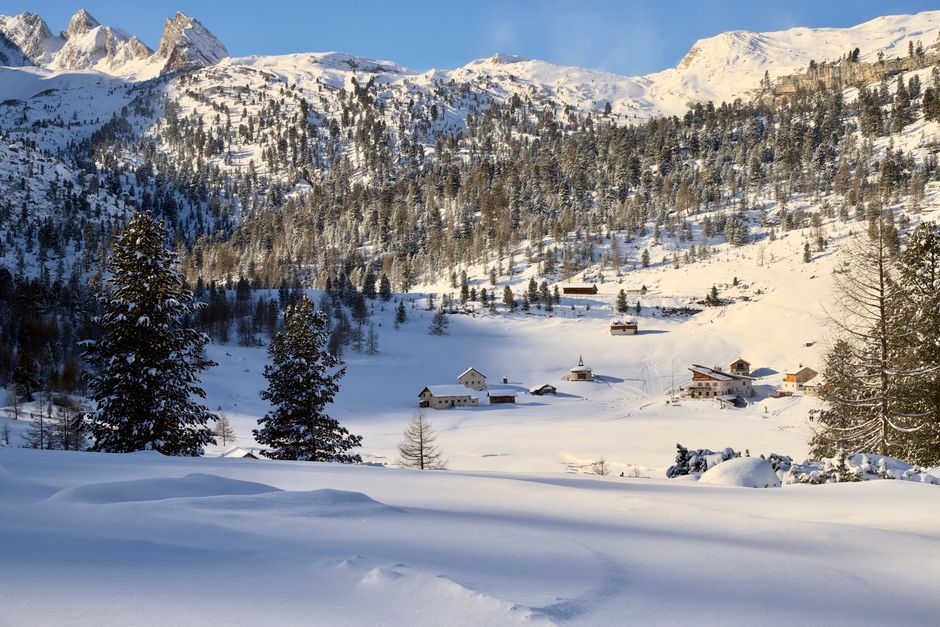
Photo by mark soetebier on Pexels
Book the week that supports the resort
For any of these resorts, the dates matter as much as the address. The calmer value window is usually mid-January through early February, then mid-March after the main school-holiday pressure eases. Christmas/New Year has atmosphere but is a poor choice if lift queues are your non-negotiable. The same is true of the busiest February weeks. Spending more on a suite does not buy you back the ski time lost at a bottleneck.
A five- or six-night stay is the sweet spot for Kühtai and Gurgl. Give Lech/Zürs and Alta Badia seven nights if you want rest days, long lunches and enough weather flexibility to avoid forcing a grand tour in poor visibility. Fly into Innsbruck for the Tyrolean resorts where schedules suit; for Lech or the Dolomites, select the airport according to the transfer you can make comfortably, not simply the lowest airfare. A late arrival plus a long road transfer is where a supposedly glamorous ski holiday begins badly.
And insure the actual trip. European piste rescue, medical treatment, lost ski days and disruption are not abstract details when a storm closes a pass or a knee twists on day two. If you plan to leave marked pistes, read the policy wording and the local rules before you book a guide. “Winter sports included” is often less complete than it sounds.
The short answer
If you want the strongest all-round choice, book Gurgl. If you want the fewest moving parts and the easiest high-altitude long weekend, book Kühtai. If the hotel experience and a broad, sophisticated ski domain are central, choose Oberlech, Lech or Zürs, with the budget and timing to match. If lunch, landscapes and relaxed intermediate skiing are the point, choose San Cassiano and resist the urge to lap the Sellaronda every day.
Luxury skiing is not being driven in a large car to stand in a long line. It is a warm boot room, a short first lift, room to ski at your own pace, and enough good decisions built into the resort that you do not need to fight for the day.
Questions we get asked
Before you book
- What does “lift capacity per bed” actually mean?
- No. It is a practical decision tool, not an audited industry statistic. Resorts do not consistently publish comparable bed counts, day-visitor volumes and hourly lift capacity, so use it to assess layout, feeder lifts, hotel position and dispersal rather than to calculate a precise score.
- Are school-holiday weeks ever worth booking?
- Usually not. Mid-January to early February and the period after the main February school holidays are normally better bets. Exact holiday dates vary by country and region, so check the guest mix for your chosen week before committing to a non-refundable room.
- Which of these resorts works best for a four-night ski break?
- Kühtai is the simplest for a short trip because the village is compact and Innsbruck is about 45 minutes by road. Gurgl is also highly efficient once you arrive, although its final valley transfer is longer. Lech/Zürs and Alta Badia reward a full week more generously.
- Which resort is best for mixed abilities?
- Yes, but choose the base carefully. San Cassiano and Gurgl are particularly forgiving for mixed intermediate groups; Kühtai is excellent for uncomplicated piste days. Lech/Zürs has more demanding options, but beginners and less confident skiers should stay close to their own lift pod rather than chase the full Arlberg circuit.
Some links in this guide are affiliate links. If you book through them we may earn a commission at no extra cost to you — it never changes what we recommend. Read our disclosure.