Three days in Rome can feel lavish rather than frantic if you make two early timed bookings and stay in the compact historic centre. This itinerary shows where to base yourself, what to reserve, and which supposedly essential experiences are not worth the time.
Rome in Three Days Without the Queues
The decision is not whether three days is enough for Rome. It is whether you will spend those three days moving through it intelligently, or surrendering half of them to badly chosen ticket lines and taxis. For a short, luxurious break, time is the real indulgence. That means sleeping in the right pocket of the centre, booking two timed entries before flights, and accepting that you cannot give every ancient stone equal attention.
For rome luxury hotels three days, I would choose Campo Marzio, the Pantheon or the quieter streets just east of Piazza Navona. From there, the Pantheon, Trevi Fountain, Spanish Steps, Piazza del Popolo, Forum and much of the restaurant city are walkable in roughly 10 to 25 minutes. The Vatican is the outlier; treat it as a deliberate morning excursion, not proof that you should sleep in Prati.
This is a plan for travellers who want Rome at its best: early, on foot, and with enough empty space around the big sights to notice the city itself.
The booking order that makes this work
Book your hotel first, then your Vatican Museums slot, then the Colosseum. Do not reverse that order. A beautiful room near the wrong end of town turns every elegant lunch into a logistical exercise.
The Vatican Museums are open Monday to Saturday from 08:00 to 20:00, with final entry at 18:00; the last Sunday of each month has different, free-entry hours and is predictably busy. The Vatican explicitly identifies its own ticket portal as the only official online seller, so avoid lookalike resellers with inflated prices. (museivaticani.va)
For the Colosseum, the timed reservation is compulsory and official ticket sales open 30 days before the visit date. In the main warmer-season schedule, the Colosseum opens at 08:30 and the Forum-Palatine at 09:00; exact closing changes sharply with the season. Put a calendar reminder at 30 days, book the first available entry, and check the current timetable again in the week before you travel. (colosseo.it)
The Pantheon is less demanding but still deserves advance thought. Standard visitor hours are generally 09:00 to 19:00, with last entry at 18:30, and religious services can affect access. It is an early-morning stop, not a midday errand. (turismoroma.it)
Where to stay if walking everywhere matters
Rome’s luxury hotels are not interchangeable. A grand name beyond the historic core may give you a larger lobby, but it also gives you more car journeys. For three nights, I would value location over a vast spa, particularly because the city’s pavements, lanes and evening light are the entertainment between bookings.
Six Senses Rome is a particularly practical choice near Via del Corso: it sits in the 15th-century Palazzo Salviati Cesi Mellini, close enough to make the Trevi–Pantheon–Piazza Navona circuit feel effortless. Choose it if you want contemporary design, a proper wellness component and a central base that does not feel ceremonial. (sixsenses.com)
Hotel de Russie suits travellers who prioritise the northern end of the centre: Piazza del Popolo, the Borghese gardens and the Spanish Steps are at your door. It is excellent for a Rome trip that includes shopping and a slower afternoon in the park. The trade-off is that dinner around Campo de’ Fiori or Trastevere becomes more of a walk home, though still a manageable one.
Maalot Roma is better for those who like intimacy over hotel theatre. Its position by Via delle Muratte makes the Trevi Fountain effectively local, with the Pantheon and Spanish Steps both easy. It is the sort of address that supports a high-output sightseeing day because you can stop back to change before dinner without turning it into an expedition.
Do not stay beside the Colosseum merely because it is on the itinerary. The archaeological zone becomes inconveniently quiet at night, while the Pantheon–Campo Marzio side gives you much better access to aperitivo, serious restaurants and an unplanned final passeggiata.
| Area | Best for | What you can walk to easily | The compromise |
|---|---|---|---|
| Pantheon / Campo Marzio | The most balanced three-day stay | Pantheon, Navona, Trevi, Spanish Steps, Forum | Vatican requires a taxi or a purposeful walk |
| Trevi / Via del Corso | First-time visitors who want maximum convenience | Trevi, Spanish Steps, Pantheon, shopping streets | Busier streets and more day-trippers |
| Piazza del Popolo | Gardens, galleries and a polished hotel stay | Borghese, Spanish Steps, Via del Corso | Farther from Trastevere and Testaccio dinners |
| Prati | Vatican-first itineraries | Vatican Museums and St Peter’s | You will cross the river repeatedly for the Rome most people picture |
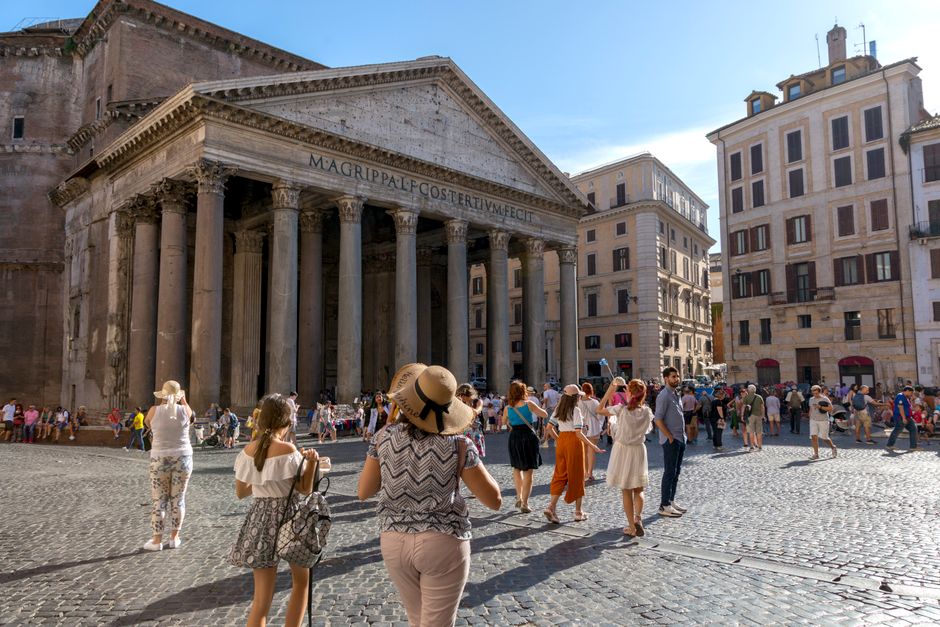
Photo by Valentin Ivantsov on Pexels
Day one: arrive, orient yourself, then take Rome seriously after dark
If you arrive at Fiumicino in the morning or early afternoon, check in, have a light late lunch, and resist the temptation to begin with the Colosseum. You will see it properly tomorrow. Today is for getting your bearings through the compact centre.
Walk from your hotel to the Spanish Steps, then take the less obvious route over to the Trevi Fountain by about 17:00. It will not be empty, but the light is forgiving and you can move on before the evening crush. Continue to the Pantheon and Piazza Navona. This is a better first encounter with Rome than ticking off a museum in a jet-lagged haze: the distances are short, the sequence makes visual sense, and you learn how the centre connects.
Book dinner no earlier than 20:30. Rome runs later than a three-day visitor expects, and an early table often means eating alongside families with tired children and leaving before the streets have settled. Avoid the restaurants with menus illustrated by photographs around the major squares. Their location is their business model.
If you land at Fiumicino with only cabin luggage and are staying near Termini, the Leonardo Express is a clean solution: it runs non-stop to Termini in 32 minutes, with departures every 15 minutes according to the airport operator. But for a hotel in the historic centre, especially after an overnight flight, a pre-booked transfer is the more civilised choice. You avoid the final taxi queue and the inevitable question of which narrow street allows a car to stop closest to your door. (prod74.adr.it)
Day two: Vatican first, then leave the crowds behind
Make the Vatican Museums your only fixed commitment of the morning. Take the first entry of the day, ideally 08:00, and be at the entrance 20 to 25 minutes beforehand. The goal is not to “beat” every visitor; it is to reach the Raphael Rooms and Sistine Chapel before the procession becomes relentless.
Dress for the rule, not for the weather: the Museums require shoulders and knees to be covered, and prohibit hats inside. Bring a light layer even in July and August. (museivaticani.va)
A good guide earns their fee here because the collection is huge and the story is not self-evident. Book a small group or private guide only for this visit; do not pay for a guide merely to escort you through a standard ticket queue elsewhere. If you prefer independence, reserve the official entry and use the museum map to pick three priorities rather than attempting every corridor. The Pinacoteca, Pio-Clementino Museum and Raphael Rooms are enough before the Sistine Chapel for most people.
Afterwards, walk to St Peter’s Square. Whether you enter the basilica depends on the visible security line and your patience. If it is moving quickly, go in. If it snakes around the colonnade, skip it without guilt and take a taxi across the river for lunch. Three days in Rome should not hinge on proving endurance.
Spend the afternoon in the Centro Storico at a slower pace: Campo de’ Fiori is worth passing through, not lingering in; the Jewish Ghetto is better for a late-afternoon wander; and the Capitoline Hill gives you one of the city’s most satisfying overlooks towards the Forum. Finish with an aperitivo near Piazza Navona, then walk back via the Pantheon once the day groups have dispersed.
Day three: the Colosseum at opening, then the Forum with a plan
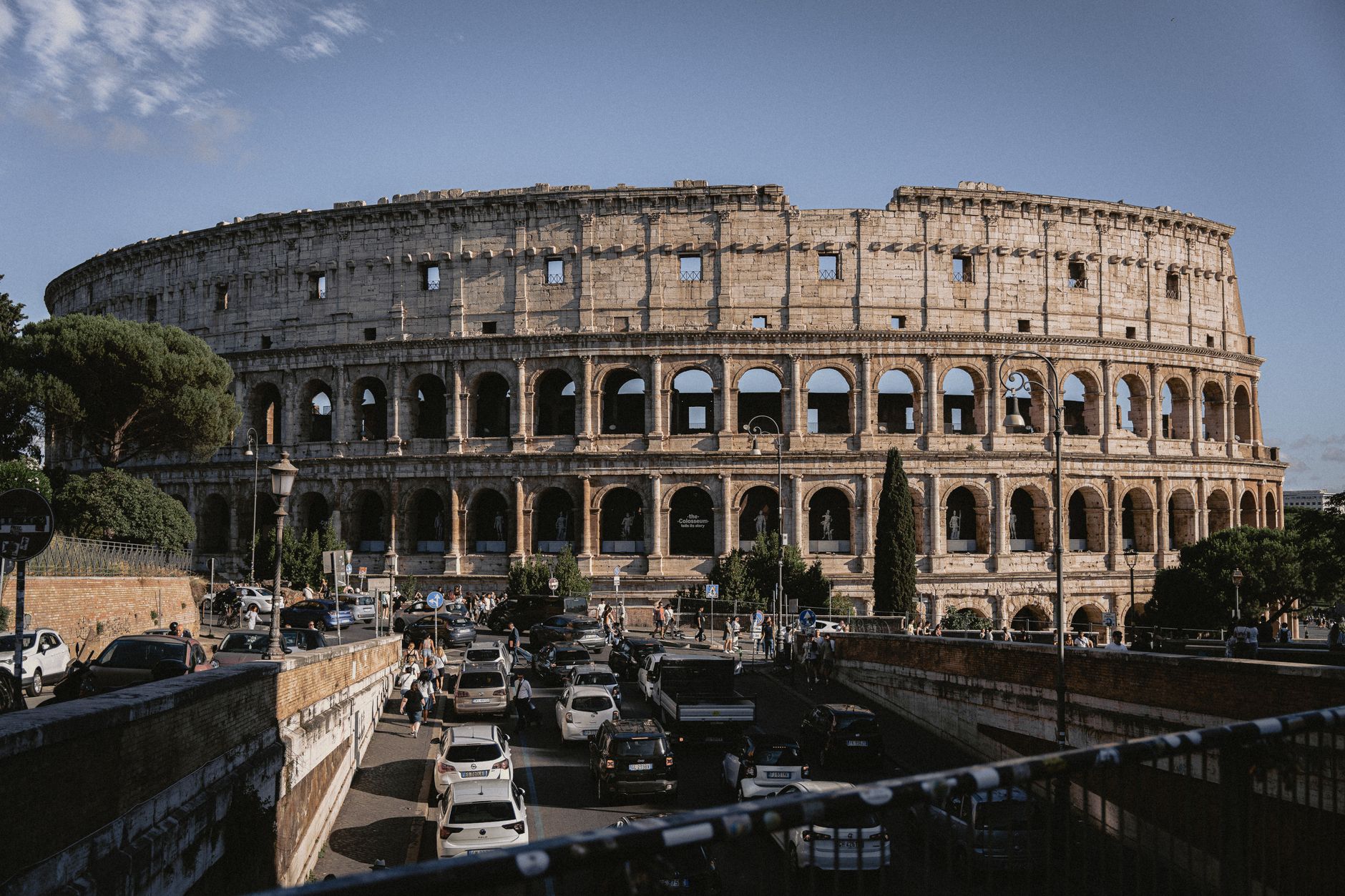
Set the alarm. An 08:30 Colosseum slot is the single most effective queue-avoidance move in Rome. Arrive 20 minutes before your slot, use the entry assigned by your ticket, and do not arrive hoping to negotiate a better access category. The standard 24-hour ticket covers one Colosseum entry and one entry to the Forum–Palatine–Imperial Fora area; enhanced routes and restricted areas have separate conditions, so buy only what you actually want to see. (colosseo.it)
There is a persistent belief that the underground or arena experience is automatically essential. It is not. The standard upper levels give a powerful understanding of the structure and the surrounding landscape. Pay for a special-access route if Roman engineering is a particular fascination, not because an algorithm told you the regular ticket is inadequate.
From the Colosseum, enter the Forum and Palatine immediately rather than saving them for after lunch. The Forum has almost no shade and its scale becomes tiring once the sun is overhead. Walk it with a short list: Arch of Titus, the Via Sacra, the Basilica of Maxentius, then climb the Palatine for the view back across the ruins. Give it two hours, perhaps two and a half if you enjoy archaeology. More is not always more; by then, lunch and a shaded table will do more for your memory of Rome than another hour of foundations.
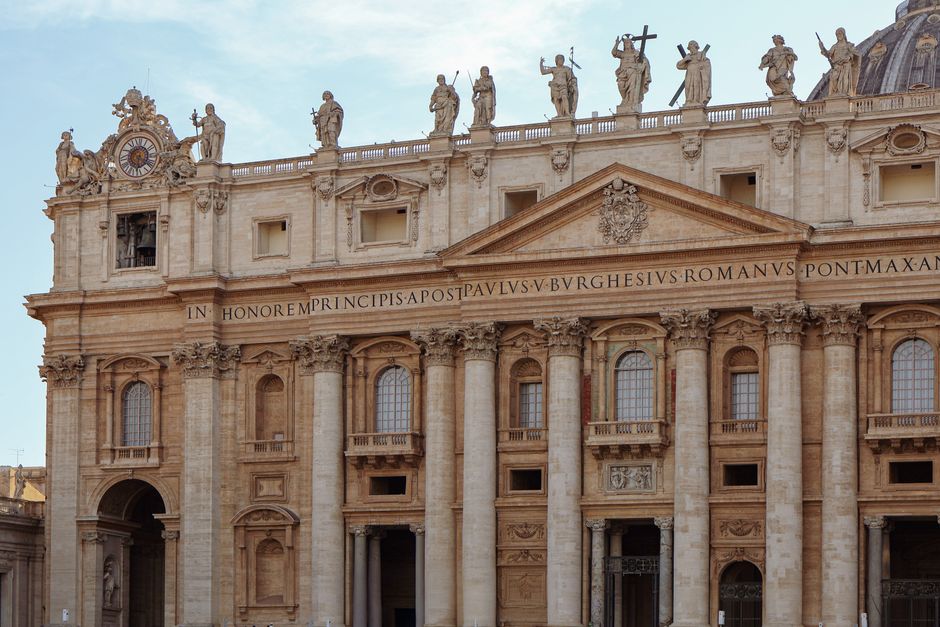
Photo by C1 Superstar on Pexels
After lunch, choose one of two endings. Art-minded travellers should go to the Borghese Gallery, but only with a timed reservation and only if the collection genuinely interests them. It is a concentrated, brilliant museum, not a duty. Everyone else should take the more Roman option: coffee, a rest at the hotel, then a final walk from Piazza del Popolo through the gardens at golden hour.
For your last dinner, do not chase a rooftop solely for the view. Too many are better at showing Rome than feeding you well. Choose a restaurant in the historic centre, book it, and walk there. The luxury of this itinerary is ending the evening a few cobbled minutes from your bed rather than waiting for a car.
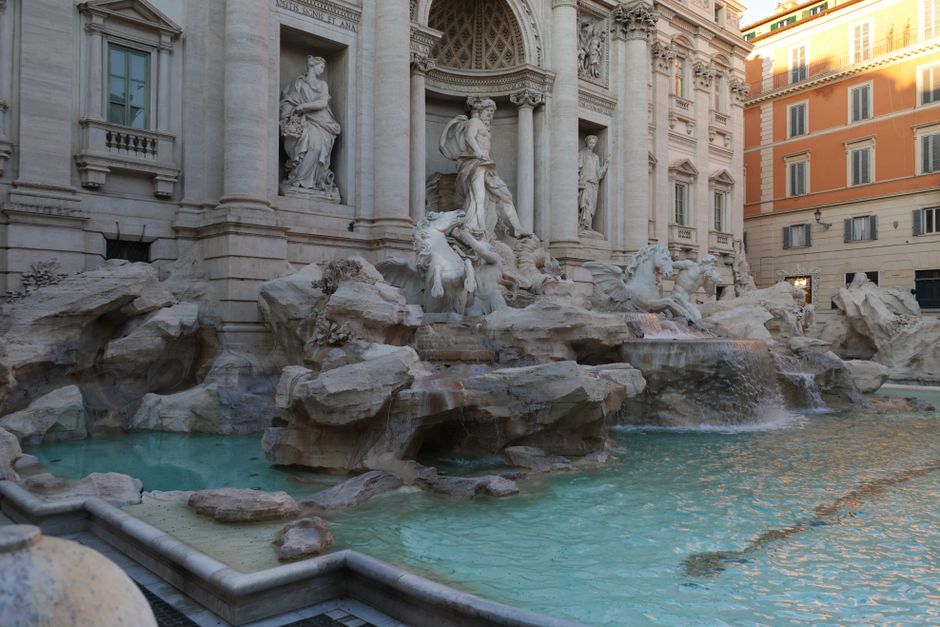
Photo by Magda Ehlers on Pexels
What to skip, and when to change the plan
Skip the free first Sunday at major state sites if avoiding queues is the purpose of the trip. The Colosseum Archaeological Park lists the first Sunday of the month among free-admission days; free is not a saving if it costs a prime morning in a crowd. (colosseo.it)
Skip a hop-on hop-off bus. Rome’s centre is walkable, its traffic is slow, and the routes tempt you to see the city from the least convincing angle. Use taxis strategically for the Vatican, a late Trastevere dinner, rain, or anyone with mobility needs. Walk the rest.
In high summer, reverse the physical parts of this plan: archaeological sites at opening, hotel break from about 14:00 to 17:30, dinner later. In November through February, use the shorter daylight and earlier monument closures to keep the Colosseum morning fixed and make museums your afternoon refuge. The Colosseum’s final admission can fall as early as 15:30 in the late-autumn and winter timetable. (colosseo.it)
Rome will still be busy. No itinerary turns it private. But timed entries, an 08:00 Vatican slot, an 08:30 Colosseum slot, and a hotel within the Pantheon–Trevi–Campo Marzio triangle remove the pointless friction. That leaves you with the things worth travelling for: a city best understood between appointments, on foot, with nowhere urgent to be next.
Questions we get asked
Before you book
- Is three days enough for a luxury Rome city break?
- Yes, provided you reserve the Vatican Museums and Colosseum before you fly and stay centrally. You will not see every museum, but you can experience the essential ancient Rome, Vatican art and the historic centre without making the trip feel like a march.
- Which area is best for a luxury hotel in Rome?
- For most first-time visitors, Pantheon, Campo Marzio or the Trevi side of Via del Corso is the best balance. Prati is sensible only if the Vatican is your overwhelming priority, because the river crossing adds friction to the rest of the itinerary.
- Which Rome tickets should I book in advance?
- Book the first available Vatican Museums entry and the first Colosseum timed entry. The Vatican’s official site identifies its own portal as the official ticket source, while Colosseum ticket sales open 30 days ahead and require a time slot.
- Are skip-the-line tours worth it in Rome?
- Only if you value expert interpretation, have a narrow window, or are booking a specialist-access visit. For the Vatican, a good small group can make an enormous collection manageable; for standard Colosseum entry, the official timed ticket is usually enough.
Some links in this guide are affiliate links. If you book through them we may earn a commission at no extra cost to you — it never changes what we recommend. Read our disclosure.