A two-week Vietnam trip becomes more luxurious when you stop spending everywhere. This north-to-south plan shows where a premium cruise and one exceptional city hotel earn their keep, and where good judgement saves money without diminishing the journey.
The real choice in a Vietnam luxury itinerary two weeks is not whether to spend generously. It is where comfort will actually change the trip, and where paying more simply buys a shinier version of something Vietnam already does brilliantly at a modest level.
My answer is uncomplicated: spend on an overnight cruise in the Gulf of Tonkin and one genuinely good city hotel in Hanoi or Ho Chi Minh City. Save on the short internal flights, ordinary meals, airport transfers, and the compulsion to turn every stop into a private guided production. Vietnam rewards discernment rather than blanket luxury.
For a first north-to-south journey, I would plan Hanoi, a two-night cruise, Hoi An, and Ho Chi Minh City. That is four bases in 14 nights, enough to feel varied without forfeiting half the holiday to check-ins and luggage. The official tourism authority itself treats an overnight cruise as the right way to experience Hạ Long rather than a rushed day trip, and notes that Lan Hạ Bay offers similarly dramatic karsts with quieter lagoons. (vietnam.travel)
The spending rule: buy time, quiet and a good bed
Vietnam is an easy country in which to overbook. A glossy itinerary can add Ninh Binh, Huế, Đà Nẵng, Phú Quốc and the Mekong Delta, but two weeks is not a contest in pinning destinations to a map. Every additional hotel creates packing, transfers and the small frictions that luxury travel is meant to remove.
Spend where the alternative is materially worse:
- The cruise: cabin position, outdoor space, food, transfer handling and time away from the congested day-boat routes matter.
- One city hotel: choose the hotel that gives you a peaceful reset after heat, traffic and sensory overload. In Hanoi, that usually means the French Quarter or a calm edge of Hoàn Kiếm; in Ho Chi Minh City, District 1 near the river or the quieter end toward District 3.
- A private arrival transfer only after a long-haul flight: this is sensible, not performative. Book the return ride locally or through the hotel if the price is sensible.
Save where the expensive version is mostly theatre:
- Street food and casual restaurants. A bowl of bún chả or cơm tấm does not become better because it arrives beneath a chandelier.
- Domestic economy flights. Use them strategically and accept their functional nature. Do not pay a premium to recreate a business-class experience on a short sector.
- Hoi An accommodation, unless beach time is the point. A handsome boutique hotel with a good pool is enough; the town is best explored on foot or by bicycle, not from a sprawling resort that requires a shuttle.
- Everyday touring. A good food walk is useful in Hanoi. A private car to narrate every lantern in Hoi An is not.
| Spend generously | Save without regret | Why it changes the trip |
|---|---|---|
| Two-night, high-quality bay cruise | One-night cruise or day boat | A second night buys space, calmer rhythms and more time on water rather than at the pier |
| Signature city hotel for 3 nights | Flashy hotel at every stop | A reliable urban base matters most where traffic, heat and noise are greatest |
| Long-haul arrival transfer | Pre-booked cars for every local journey | You need certainty once; ride-hailing and hotel cars can handle the rest |
| A focused food or history guide | Generic all-day private tours | Context is valuable; padded itineraries are not |
Days 1–4: Hanoi, then the bay
Give Hanoi three nights at the beginning. That first full day should be deliberately light: a late breakfast, an unhurried walk around Hoàn Kiếm Lake, the Old Quarter in short doses, then an early dinner. Do not arrive from a red-eye and immediately schedule museums, cyclo rides and a tasting menu. Hanoi’s reward is accumulation: morning coffee on a low stool, neighbourhood temples, faded façades in the French Quarter, the sudden hush inside a courtyard. It needs a little stamina.
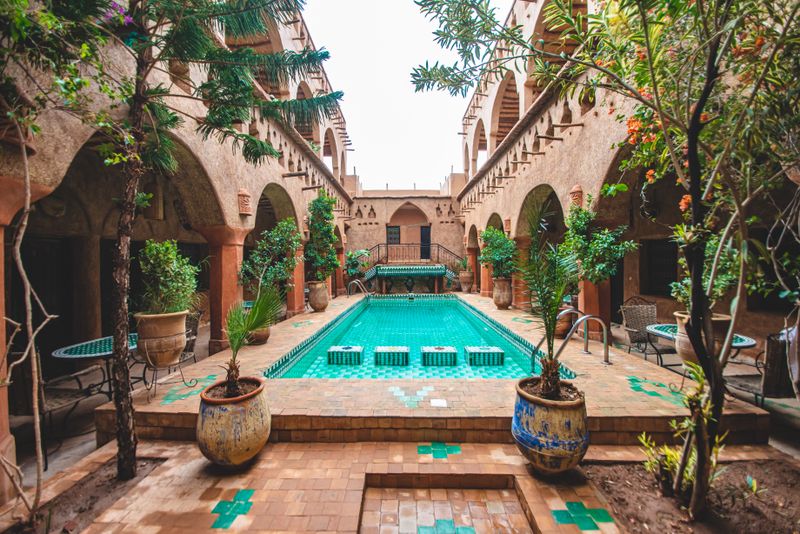
This is the city-hotel splurge I endorse. A room with real soundproofing, effective air-conditioning, a decent mattress and a pool or calm terrace is not an indulgence after a day on the pavements; it is the reason you remain patient with the city. I would favour location and serenity over the largest suite. An oversized room too far from Hoàn Kiếm is a poor trade.
On day two, book one excellent small-group food walk or a private half-day guide with a narrow brief: Hanoi’s cooking, modern history, or architecture. Ask for no forced shopping stops. Spend the rest of the day independently. On day three, choose one cultural anchor—perhaps the Temple of Literature, the Fine Arts Museum or a water-puppet performance—rather than trying to complete Hanoi as though it were a syllabus.
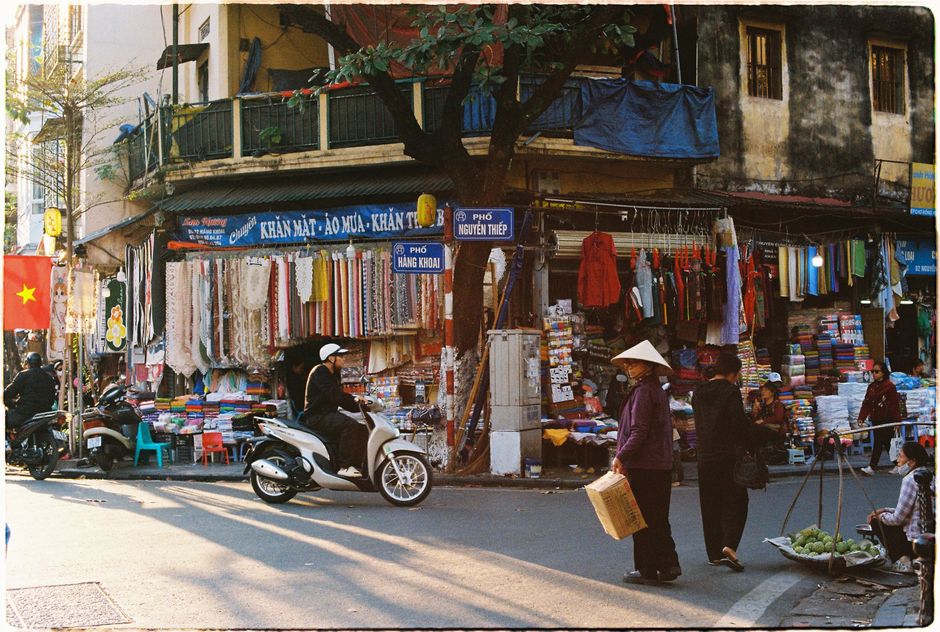
Photo by Ama Journey on Pexels
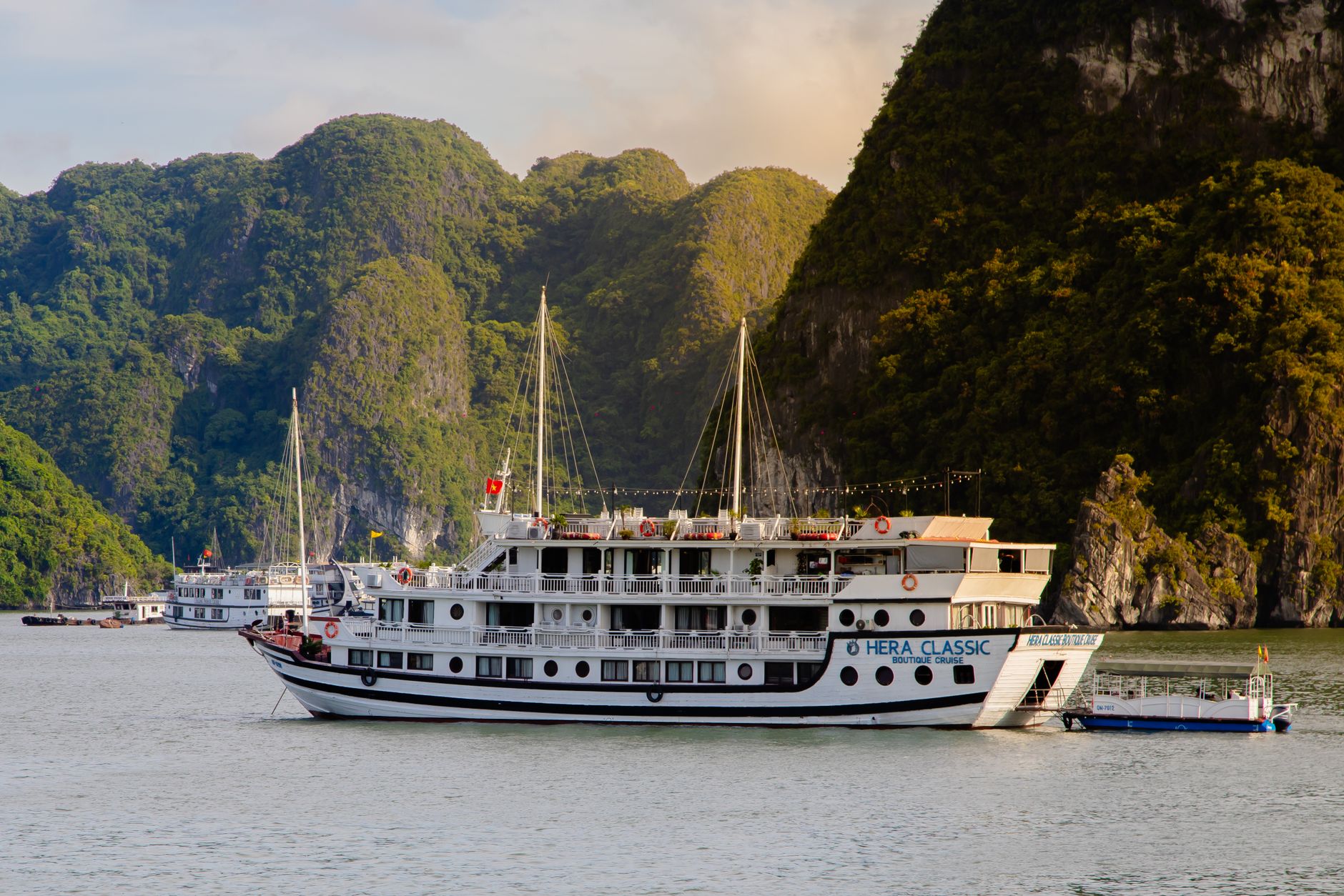
On day four, leave for the cruise. Treat the transfer as part of the booking decision. You do not want a bargain operator that wastes the best daylight in a waiting room, or a boat that appears luxurious online but has a cramped cabin and a dining room built for a coach party. Vietnam’s tourism authority specifically recommends longer Hạ Long sailings over quick excursions; that is the correct instinct. (vietnam.travel)
Why the cruise gets the largest splurge
Book two nights if the itinerary and budget allow. One night is enjoyable but compressed: transfer, boarding, lunch, an excursion, dinner, early wake-up, brunch, back to shore. Two nights creates the one thing people are really travelling for: periods when you are simply on deck with the limestone formations drifting by.
Look for a smaller vessel, a cabin with a balcony, clear inclusion of transfers and excursions, and an itinerary in Lan Hạ Bay or Bái Tử Long Bay rather than the busiest central Hạ Long routes. There is no need to pay for gold taps or a faux-palatial aesthetic. Pay for routing, space and operational competence. The national tourism site identifies Lan Hạ’s lagoons and beaches as a quieter alternative, while two-night voyages allow more time beyond the usual short circuit. (vietnam.travel)
Avoid the cheapest one-night cruises, but also avoid paying wildly above the market for “private” experiences unless you are chartering with family or friends. Most of the pleasure comes from the landscape and the overnight schedule, both of which a well-run premium shared boat can provide.
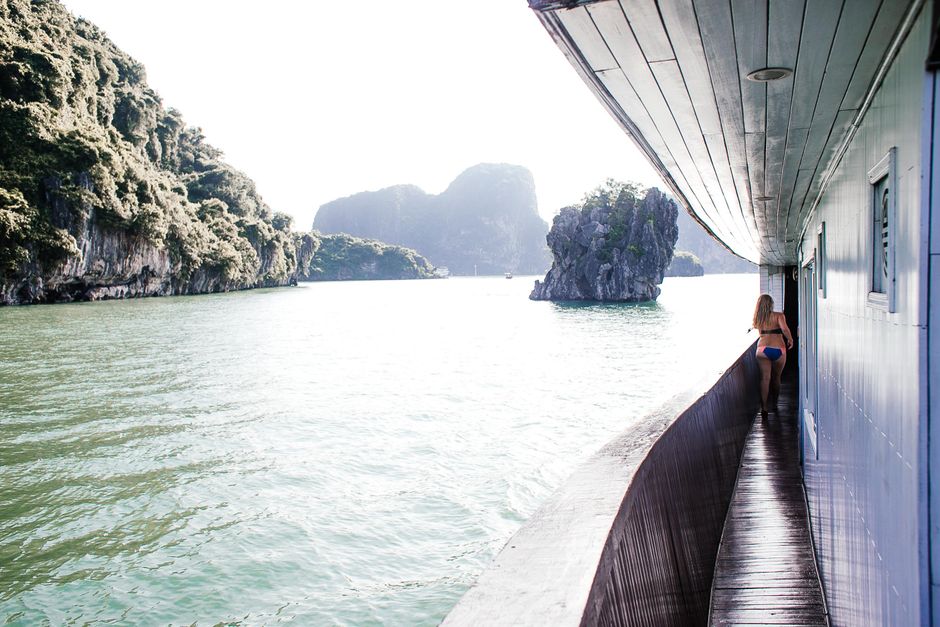
Photo by Rachel Claire on Pexels
Days 6–10: Hoi An, with a sensible pause
After disembarkation, return to Hanoi and fly to Đà Nẵng, then transfer to Hoi An. It is a logistical day, so do not plan a precious dinner reservation that night. A two- or three-night cruise plus Hanoi makes Hoi An your exhale: schedule four nights here.
Stay either just outside the Ancient Town, where you can walk in before breakfast and after dinner, or by An Bàng beach if swimming and slow lunches are central to the trip. Do not split between town and beach hotels. The distance is manageable, and moving for the sake of a different pool is needless admin.
Hoi An is where spending restraint pays off. A lovely small hotel, perhaps with bicycles and a pool, is quite enough. Spend on a skilled tailor only if you know exactly what you want and have time for fittings; otherwise it is easy to return home with clothes that are merely cheap. The better use of time is a cooking class that begins in the market, a bicycle ride through the rice fields early in the morning, or an afternoon by the sea.
The old town is at its nicest at first light and after dinner, once you accept that lantern-lit evenings draw crowds. Go then for atmosphere, not solitude. During the middle of the day, retreat to the pool, beach or a long lunch. You do not need a guide to enjoy it.
Days 10–14: Ho Chi Minh City, then depart
Fly south and spend the final four nights in Ho Chi Minh City. I prefer ending here rather than beginning here: the energy is sharper, and you will be ready to meet it. Book the second luxury hotel here only if you prefer a city-focused finale to Hanoi. Otherwise, choose one polished, comfortable property and direct the saved money toward restaurants, cocktails and a proper final-night meal.
District 1 is practical but can be noisy. The best compromise is a hotel close enough to walk to the river, the Opera House and central restaurants, but not directly on the loudest backpacker streets. District 3 is more residential and often better for travellers who value sleep over being in the thick of the action.
Use one day for the city itself: a considered route through colonial-era buildings, contemporary galleries and markets, with breaks from the heat. Use another for the Mekong Delta only if you are genuinely interested in river life and can book a small-group or private itinerary that leaves early. The largest coach tours are not a luxury bargain; they are a long day of traffic and staged stops. If that does not appeal, remain in the city. Ho Chi Minh City has enough excellent eating, design and neighbourhood texture to justify the time.
For data, install an eSIM before departure. It makes drivers, flight messages and hotel coordination much easier, particularly when a day shifts around a transfer. It is not glamorous, but it prevents an unnecessary amount of faff.
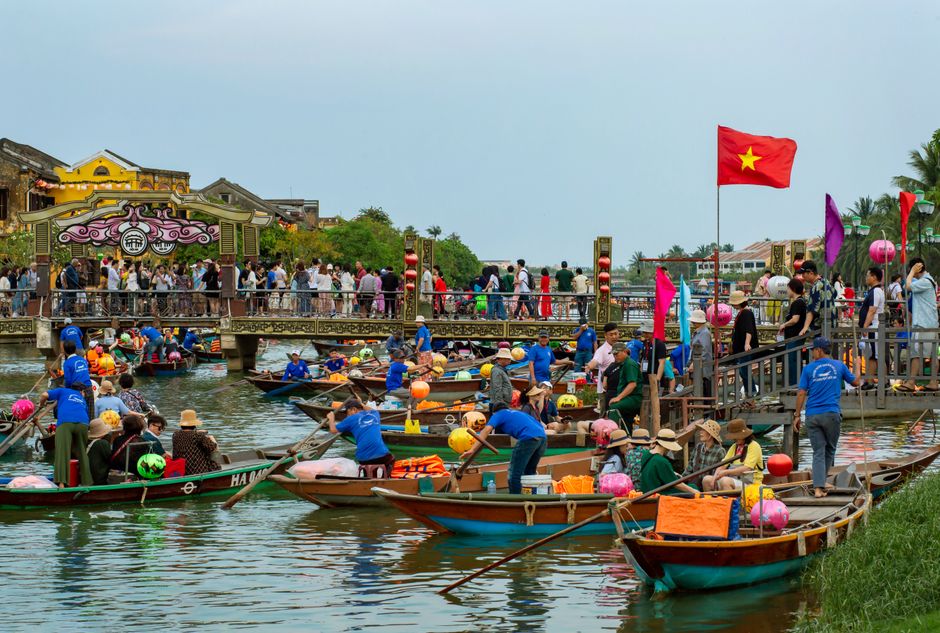
Photo by Võ Văn Tiến on Pexels
Booking order and practical mistakes to avoid
Book in this order: international flights; bay cruise; Hanoi hotel; internal Hanoi–Đà Nẵng and Đà Nẵng–Ho Chi Minh City flights; then the other hotels. The cruise is the inflexible piece, and the rest should support it. Build in a buffer night in Hanoi before the outbound long-haul departure rather than flying in from the coast on the same day.
Check visa rules against the official Vietnamese immigration portal rather than an agency’s summary. The official e-visa system currently states a maximum validity of 90 days, offers single- and multiple-entry options, and warns that fees are non-refundable; it also recommends completing the pre-arrival form before entry. (evisa.gov.vn)
Finally, travel north to south with a small case. You will encounter steps, uneven pavements, hotel staircases and quick airport manoeuvres. A fashionable hard case that is too heavy for you to lift is an odd form of self-sabotage. Bring breathable clothes, one light layer for heavily air-conditioned interiors, and shoes you can walk in for hours.
The best version of this trip is not maximalist. It gives Hanoi time to get under your skin, treats the cruise as a true stay rather than a photograph, lets Hoi An slow the pace, and finishes in a city that still has an appetite after dark. Spend on those experiences. Let the rest stay straightforward.
Questions we get asked
Before you book
- Is two weeks enough for north-to-south Vietnam?
- Four bases in 14 nights is the sweet spot: Hanoi, a two-night cruise, Hoi An and Ho Chi Minh City. Adding Ninh Binh or Huế can work, but usually only by making the trip feel like a sequence of transfers rather than a holiday.
- Should I book a one- or two-night Hạ Long Bay cruise?
- Yes, if the cruise is an important part of the trip. A one-night sailing is viable when time is tight, but it is a compressed schedule; two nights give you far more time on the water and less of the standard embarkation-and-disembarkation churn.
- Which city deserves the hotel splurge: Hanoi or Ho Chi Minh City?
- For a first visit, Hanoi is the better place to spend on a standout hotel because it is denser, noisier and more exhausting to navigate. Choose Ho Chi Minh City instead only if you care more about a polished final stay, restaurants and nightlife.
- Do I need private transfers throughout Vietnam?
- Not necessarily. Use private transfers after a long-haul arrival, for cruise connections if included, and for an early airport run. For ordinary city trips, hotel-arranged cars and established ride-hailing services are usually the more sensible choice.
Some links in this guide are affiliate links. If you book through them we may earn a commission at no extra cost to you — it never changes what we recommend. Read our disclosure.